SPC and Laminate Flooring Supplier from China


SPC Flooring
SPC — stone plastic composite — is a rigid-core flooring made of limestone powder and PVC, with a printed decor film, a UV-cured wear layer and a click profile. It does not swell, delaminate or telegraph the subfloor, which is why it is the default for whole-house renovation, basements and rental portfolios.
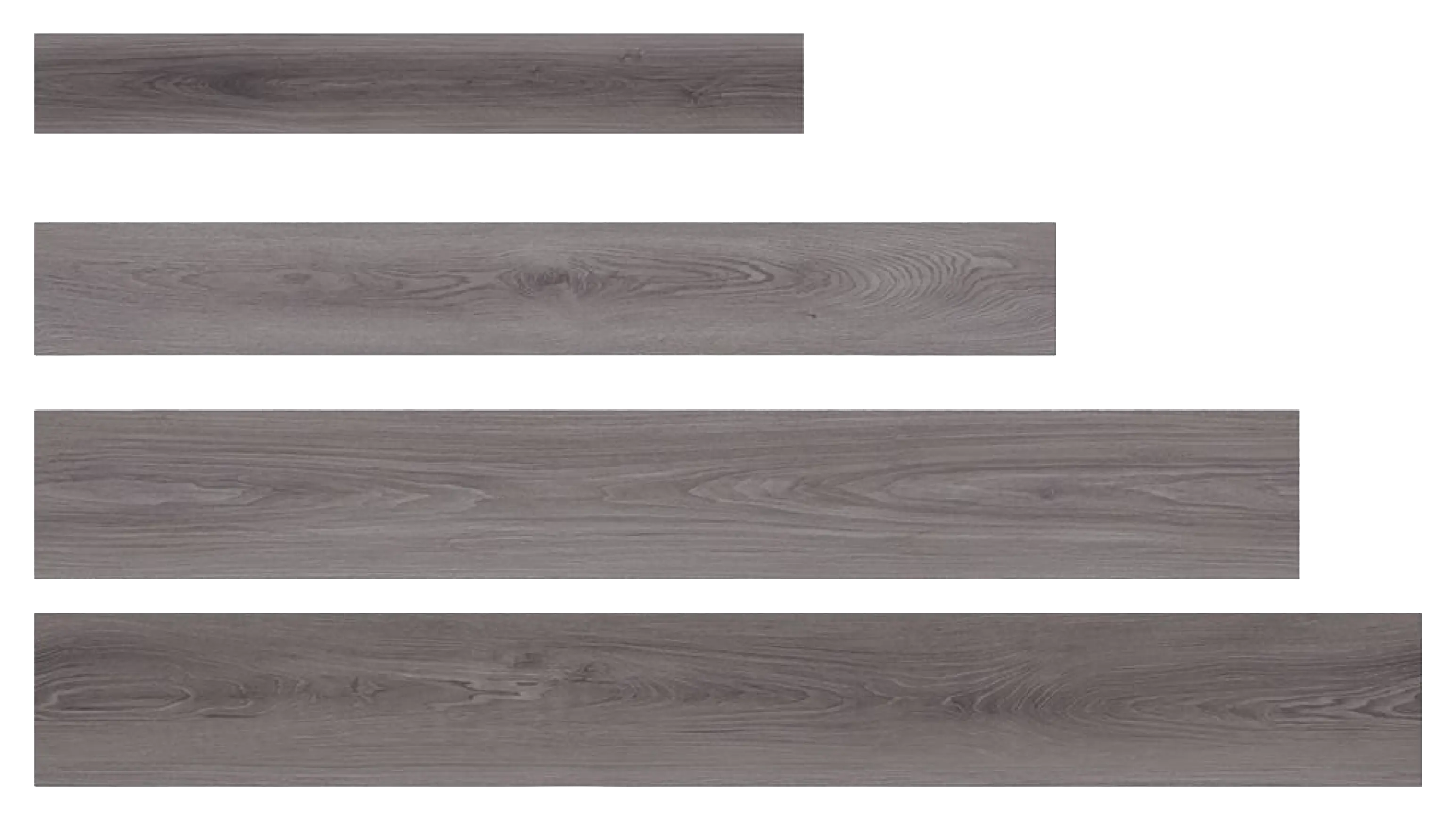
150 * 910 mm
182 * 1220 mm
230 * 1220 mm
230 * 1525 mm
3.5–7 mm
Thickness
0.1–0.5 mm
Wear layer
Unilin / Valinge 2G
Click system
600 m²
MOQ (stock film)
01 — CONSTRUCTION
Construction
A board is five layers. Everything above the core is film; the core is the structure, and the click profile is milled into it rather than glued on.
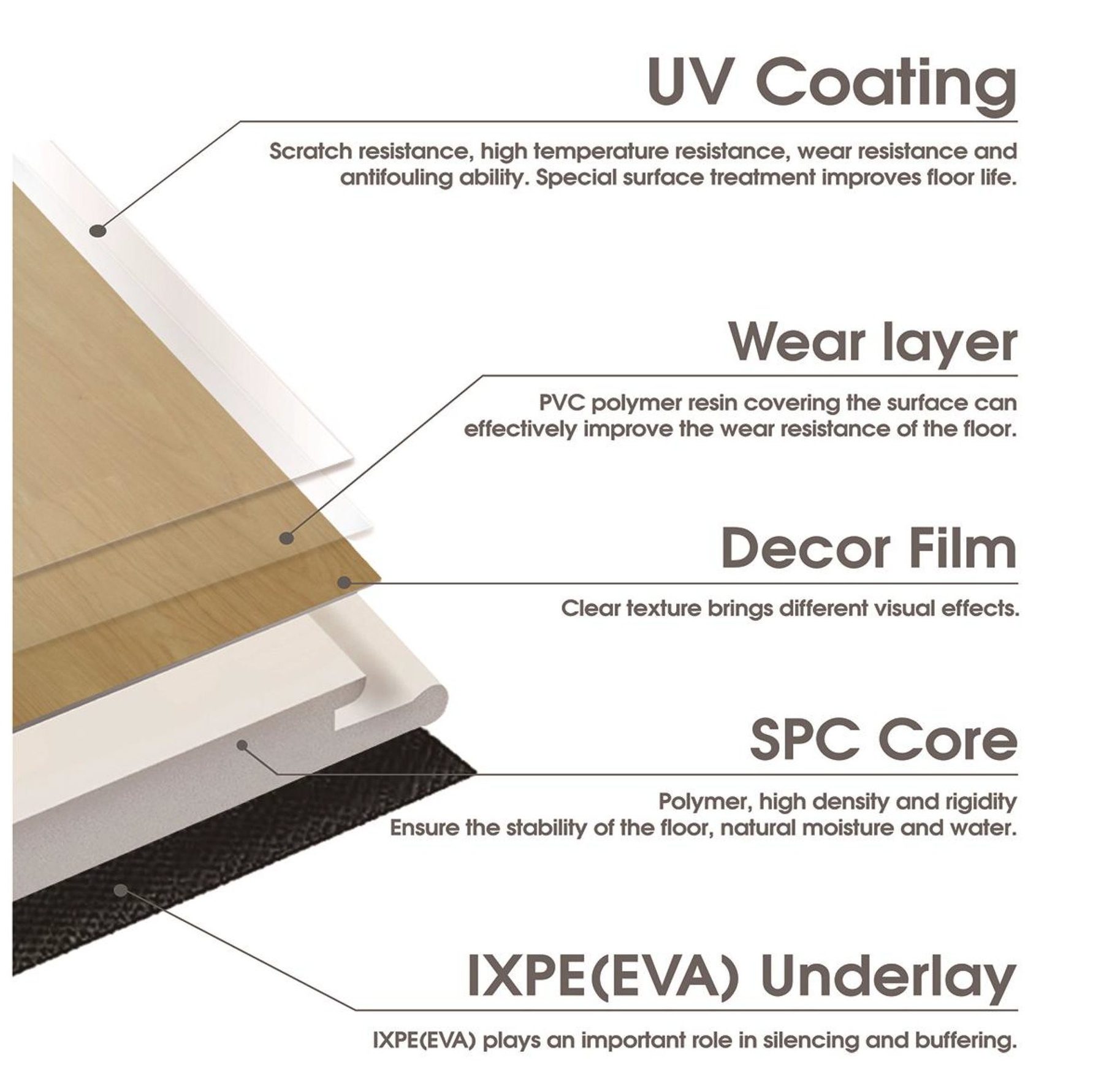
- UV coating — cured in line. It takes the scuff from a chair leg and keeps the print from fading behind a window.
- Wear layer — clear PVC film, 0.1 to 0.5 mm. 0.3 mm (12 mil) is the residential standard; 0.5 mm (20 mil) is the light-commercial choice.
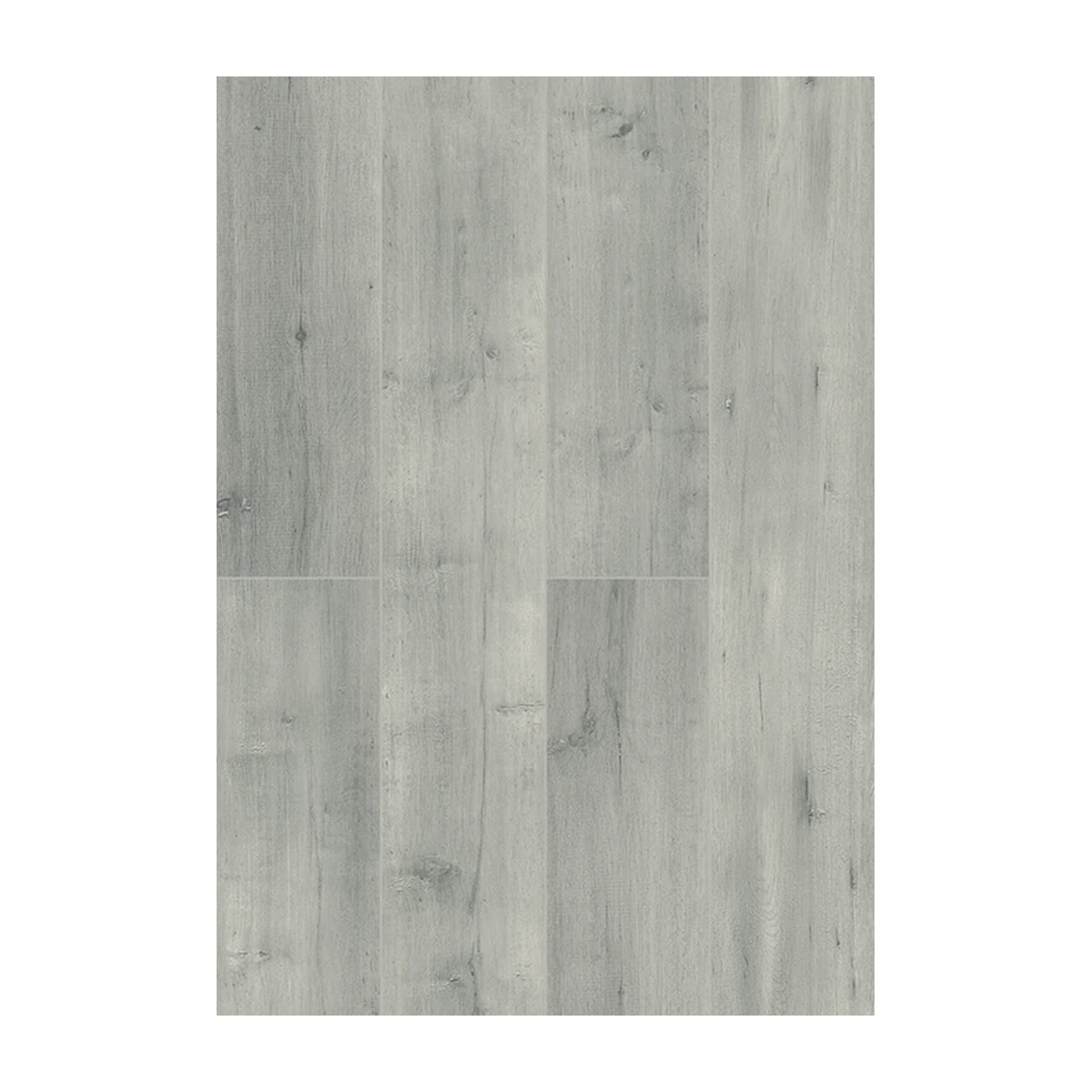
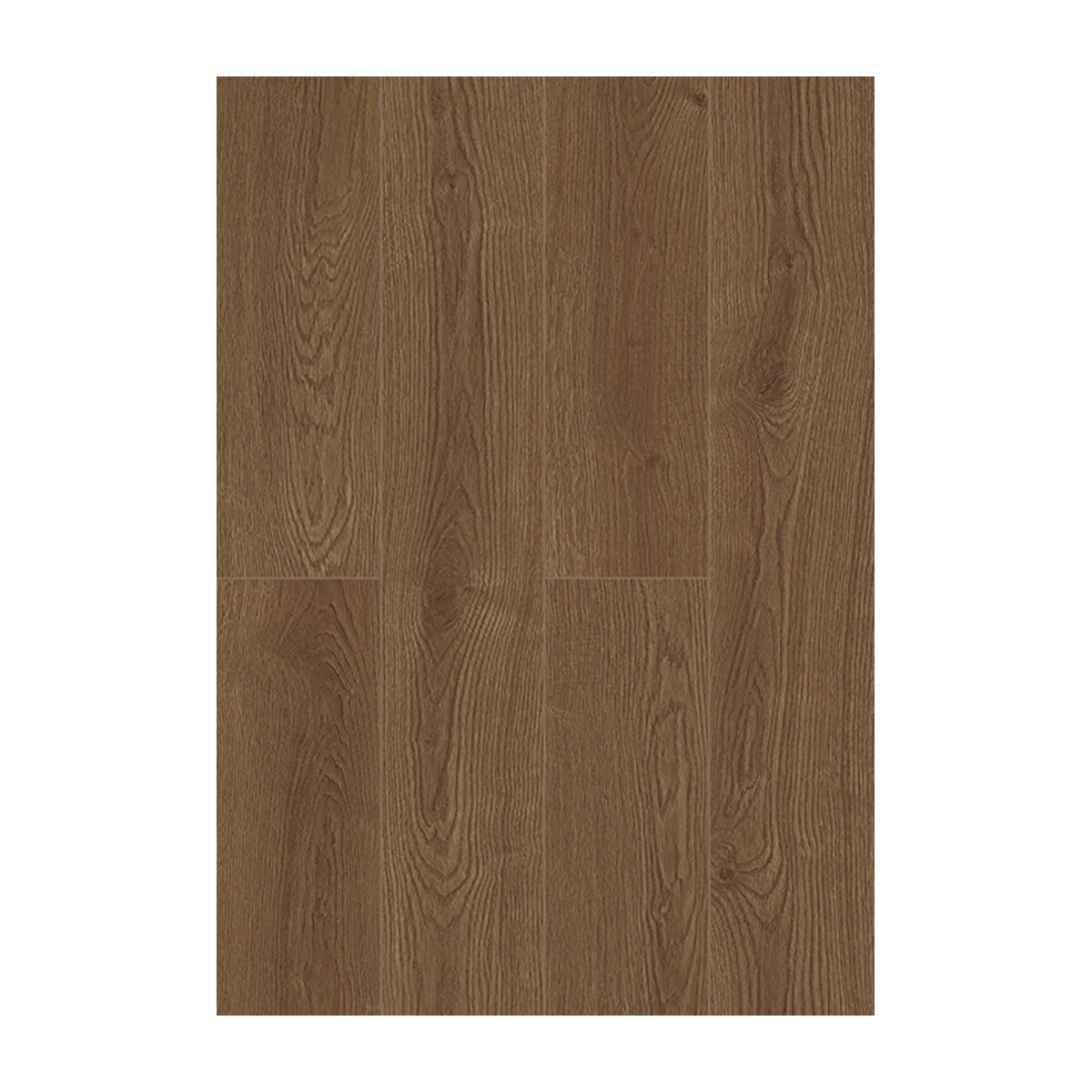
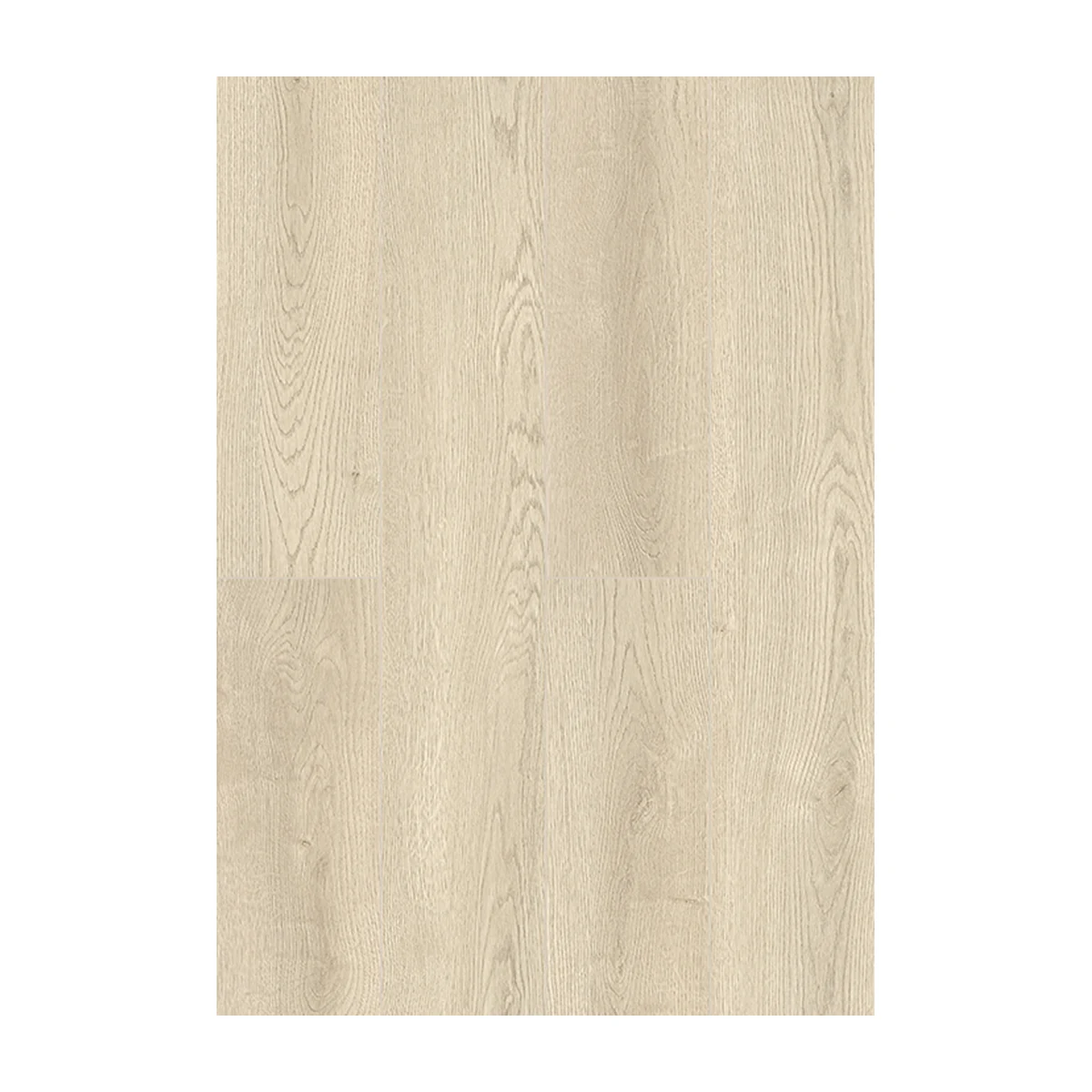
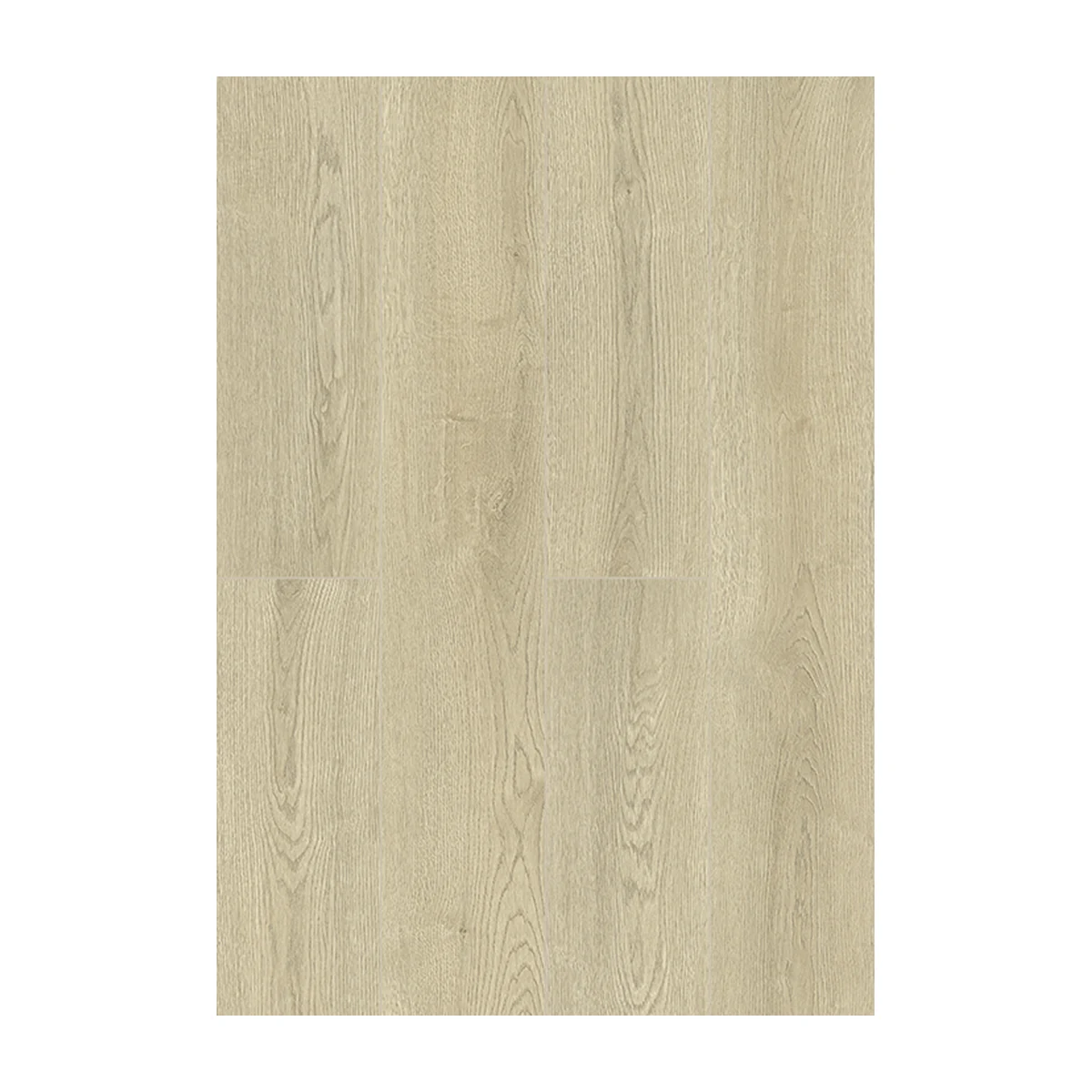
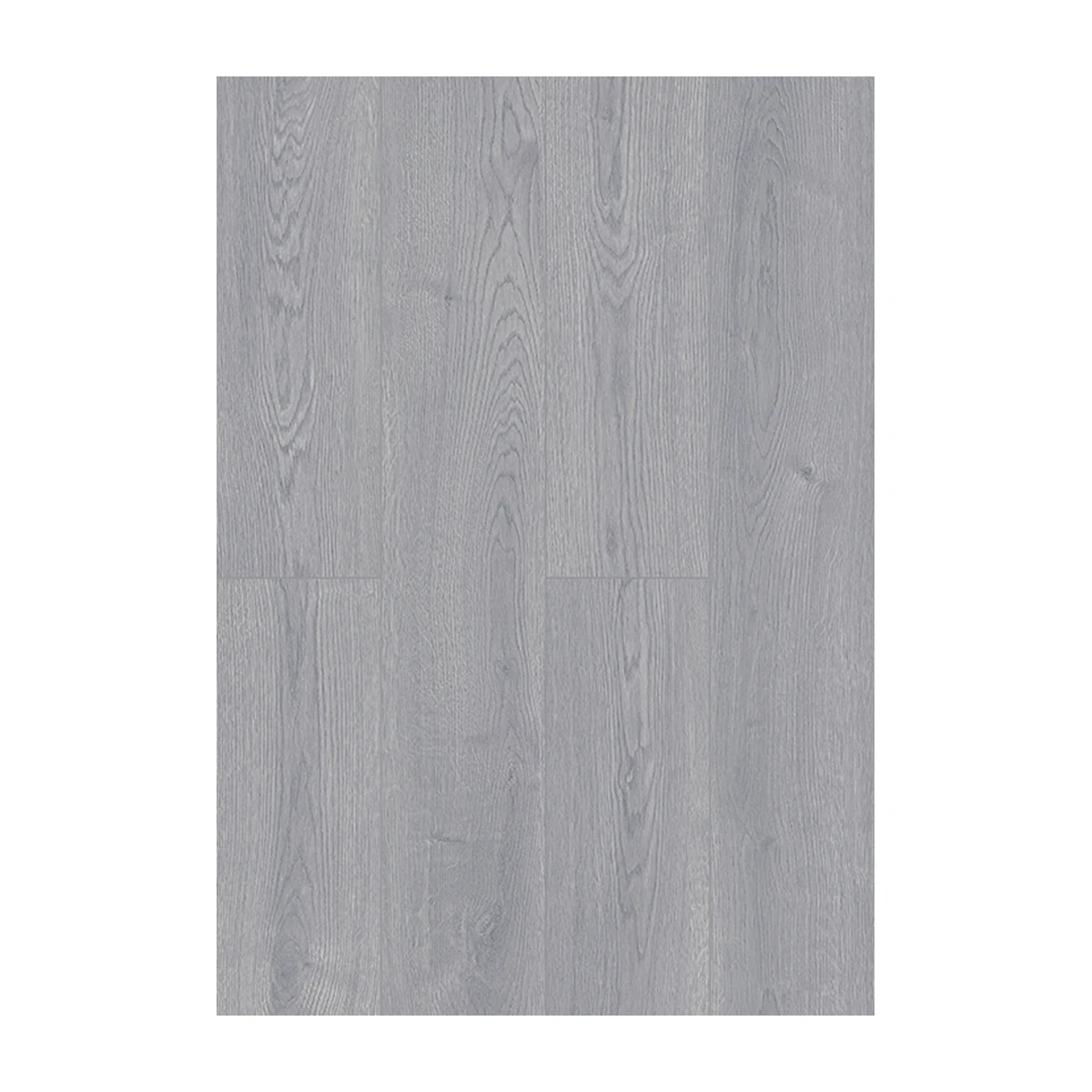
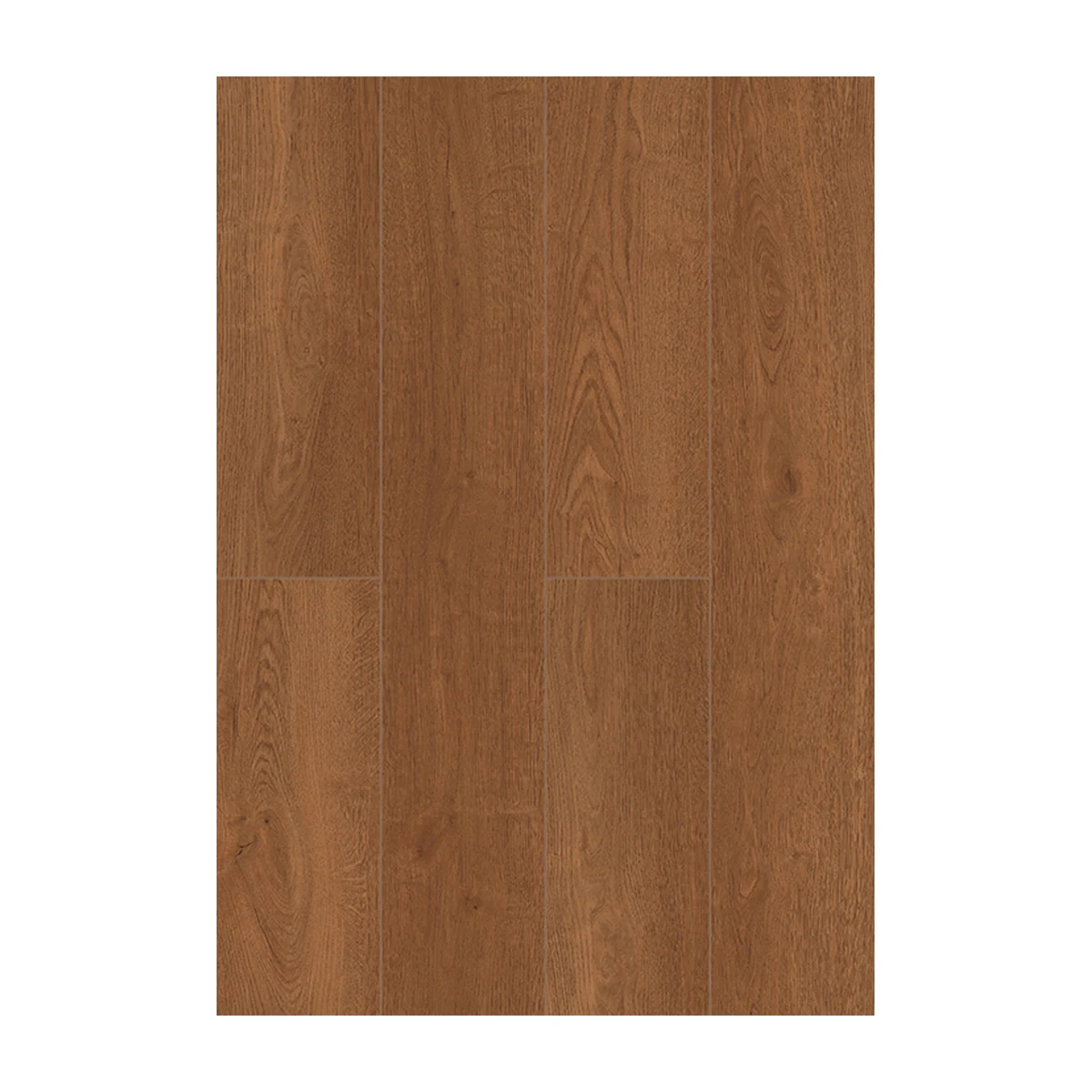
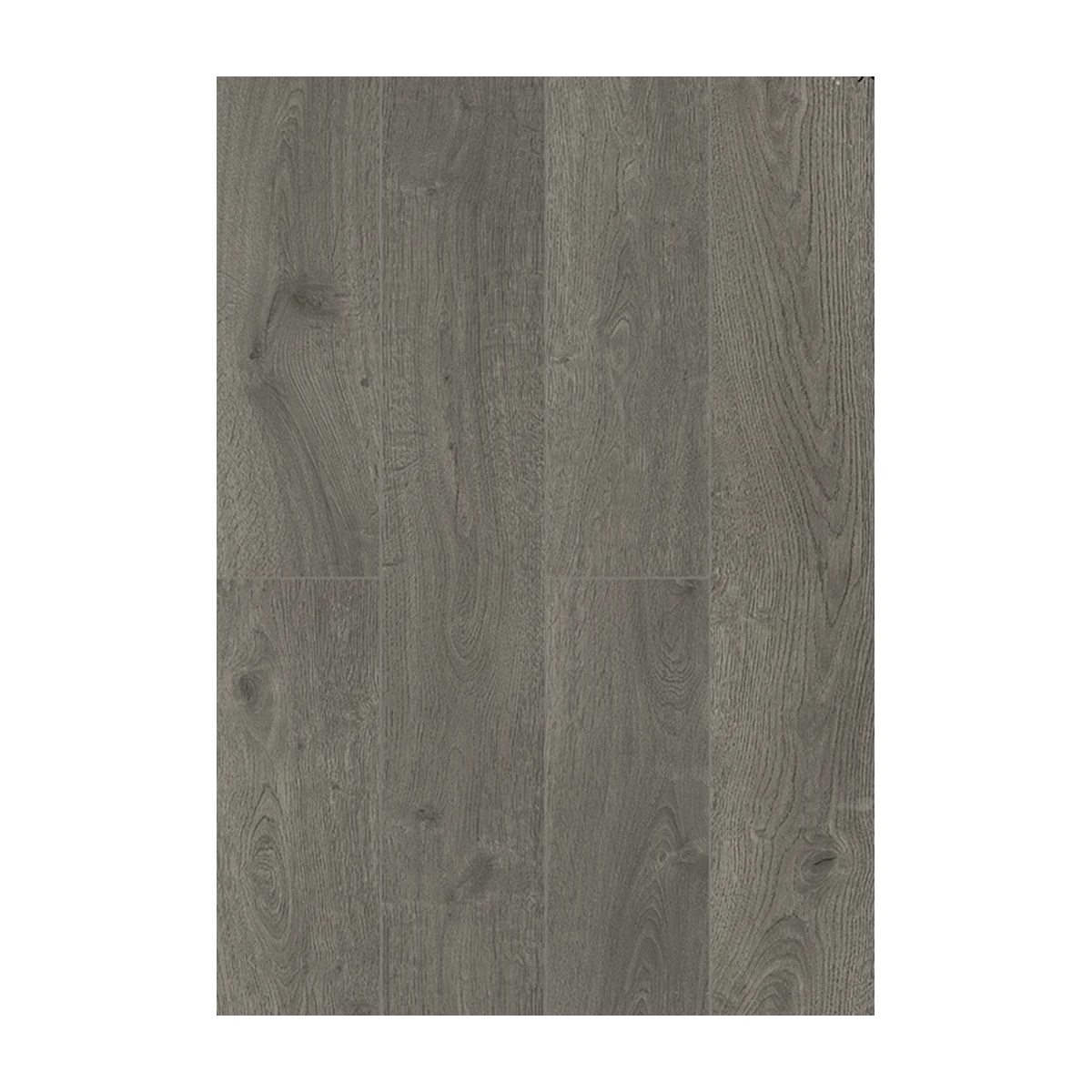
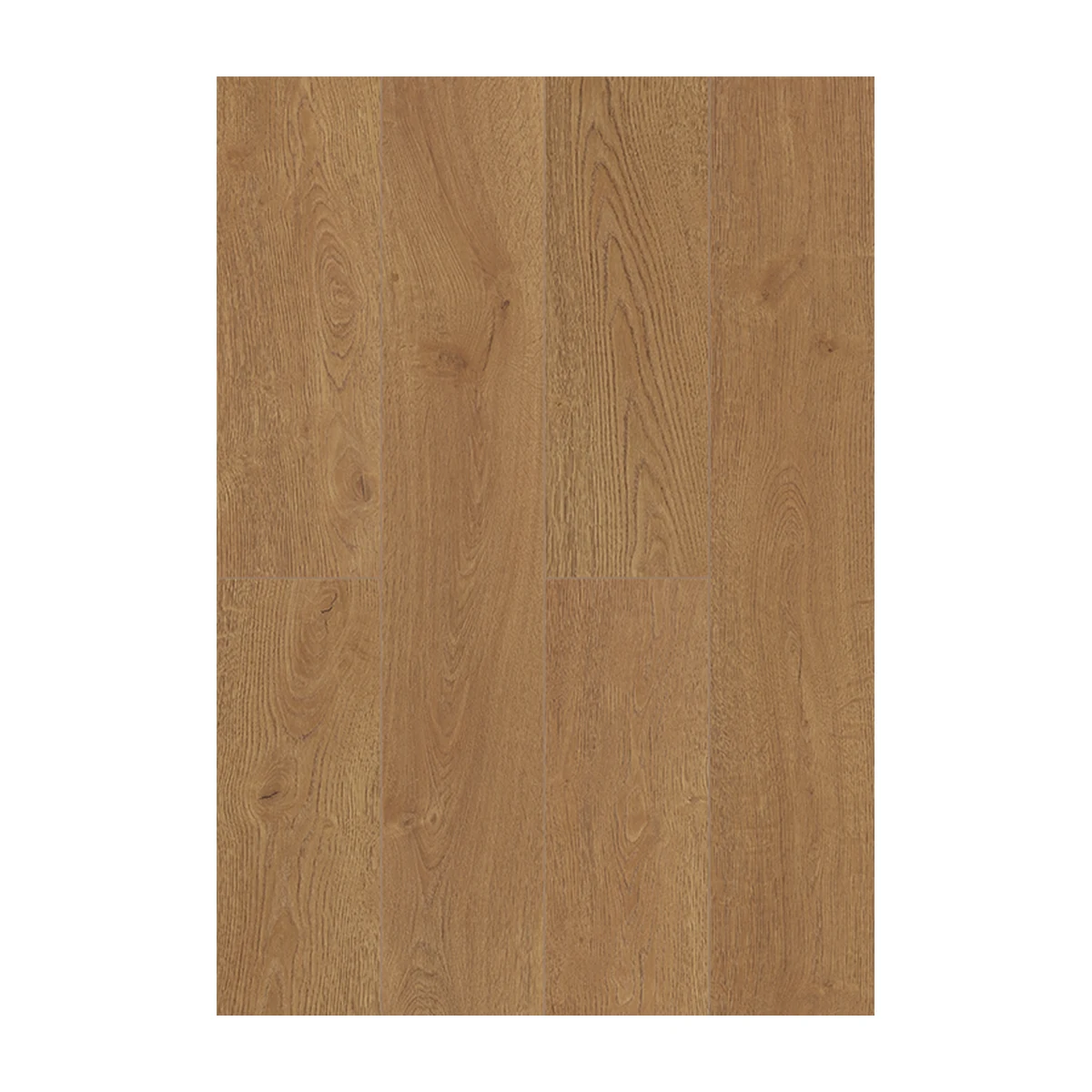
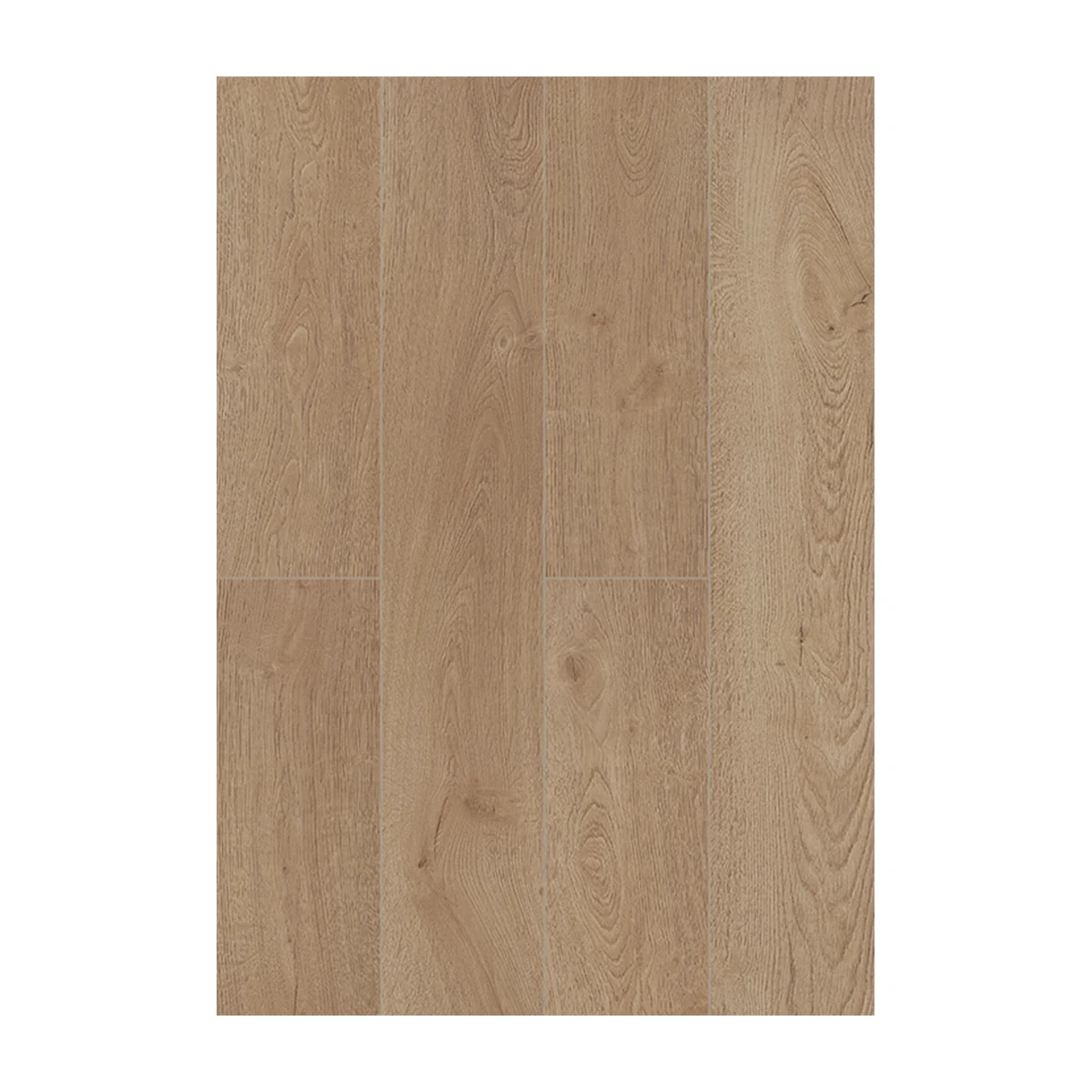
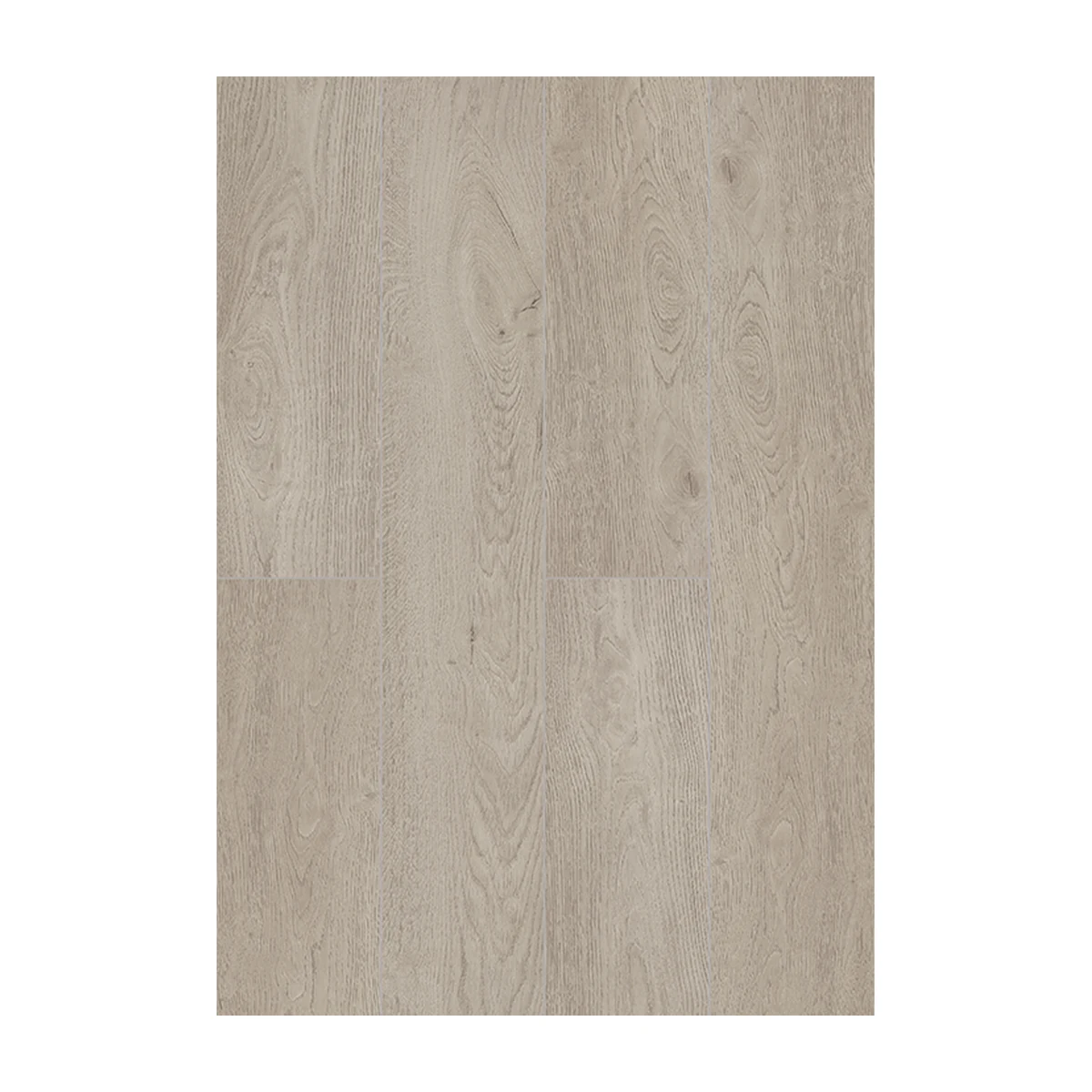
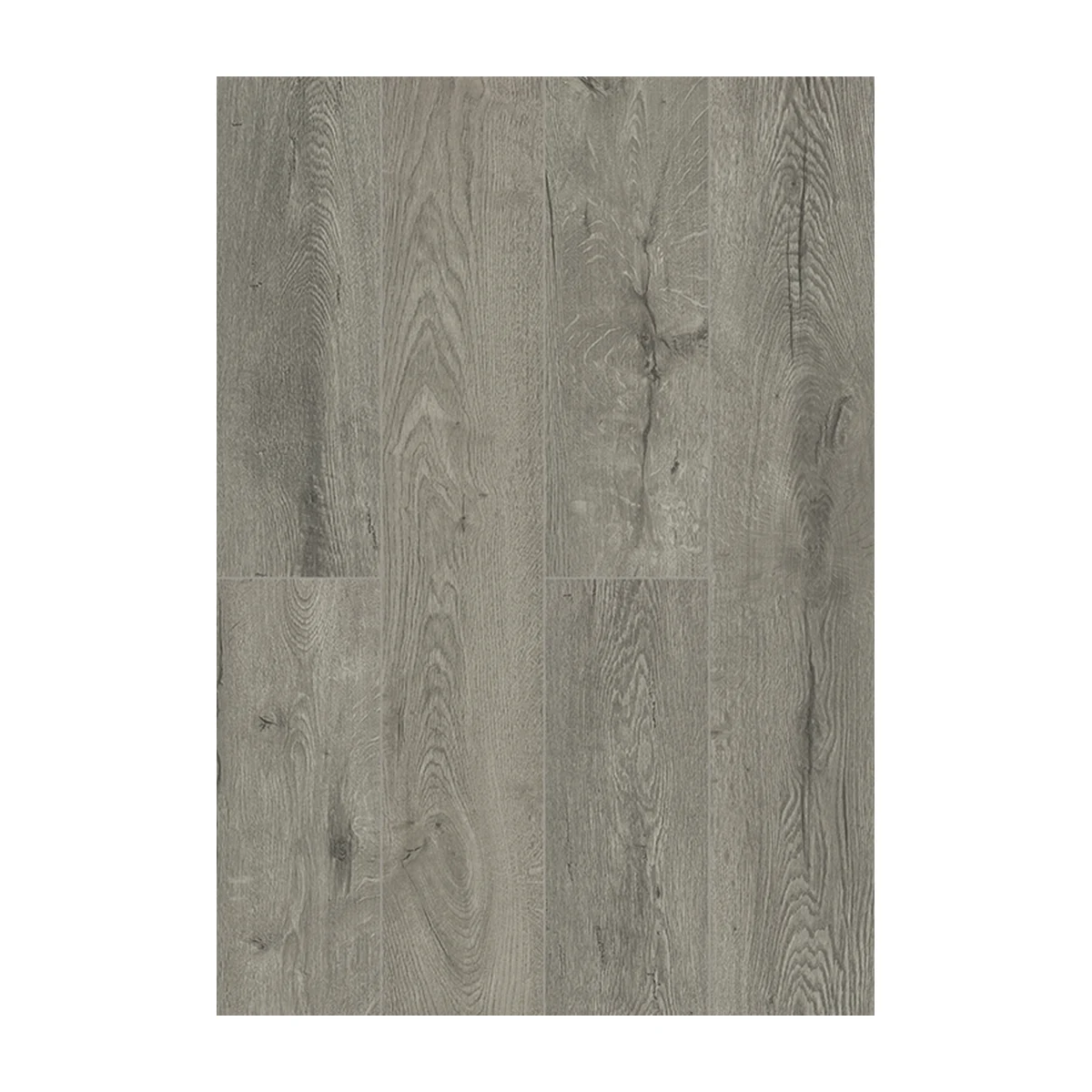
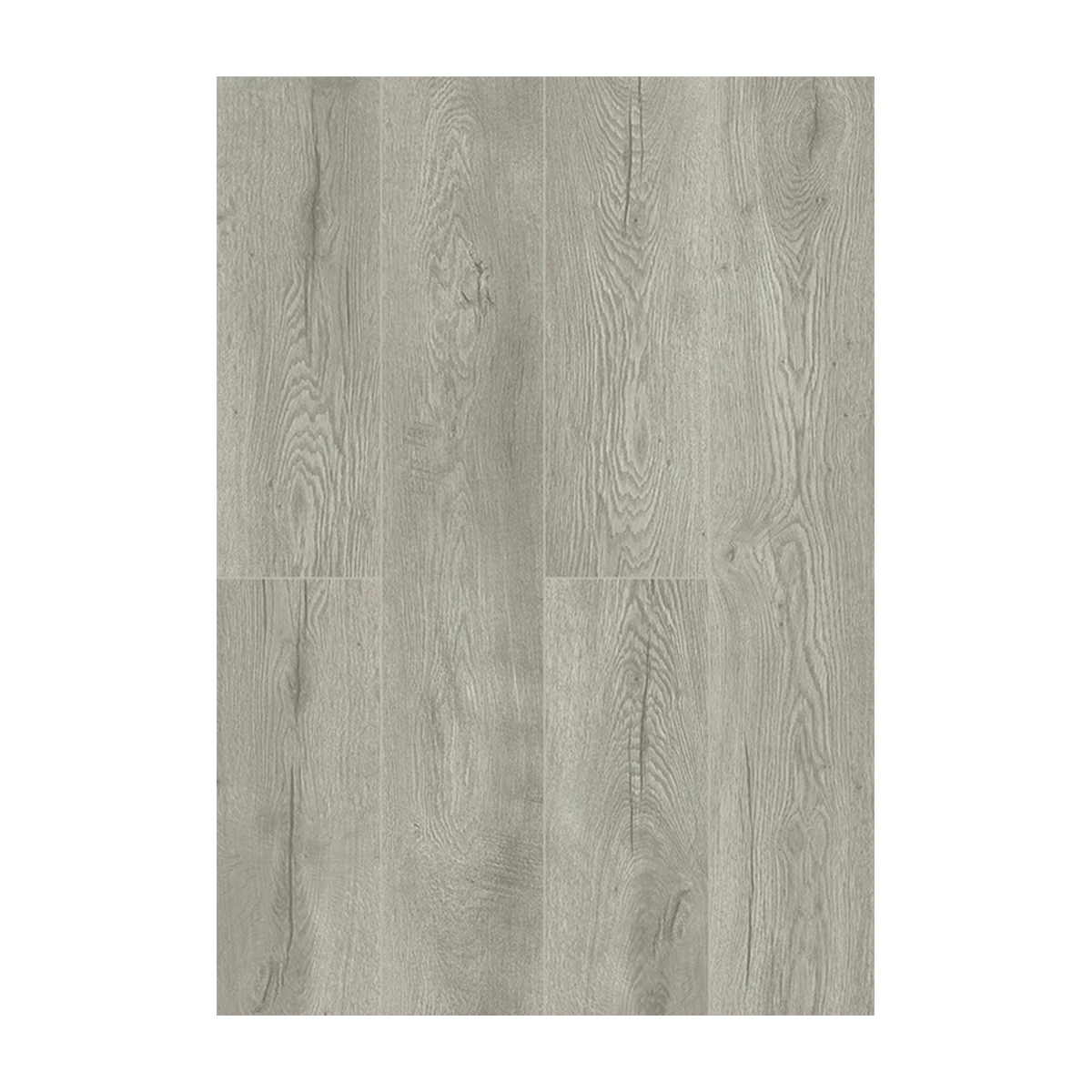
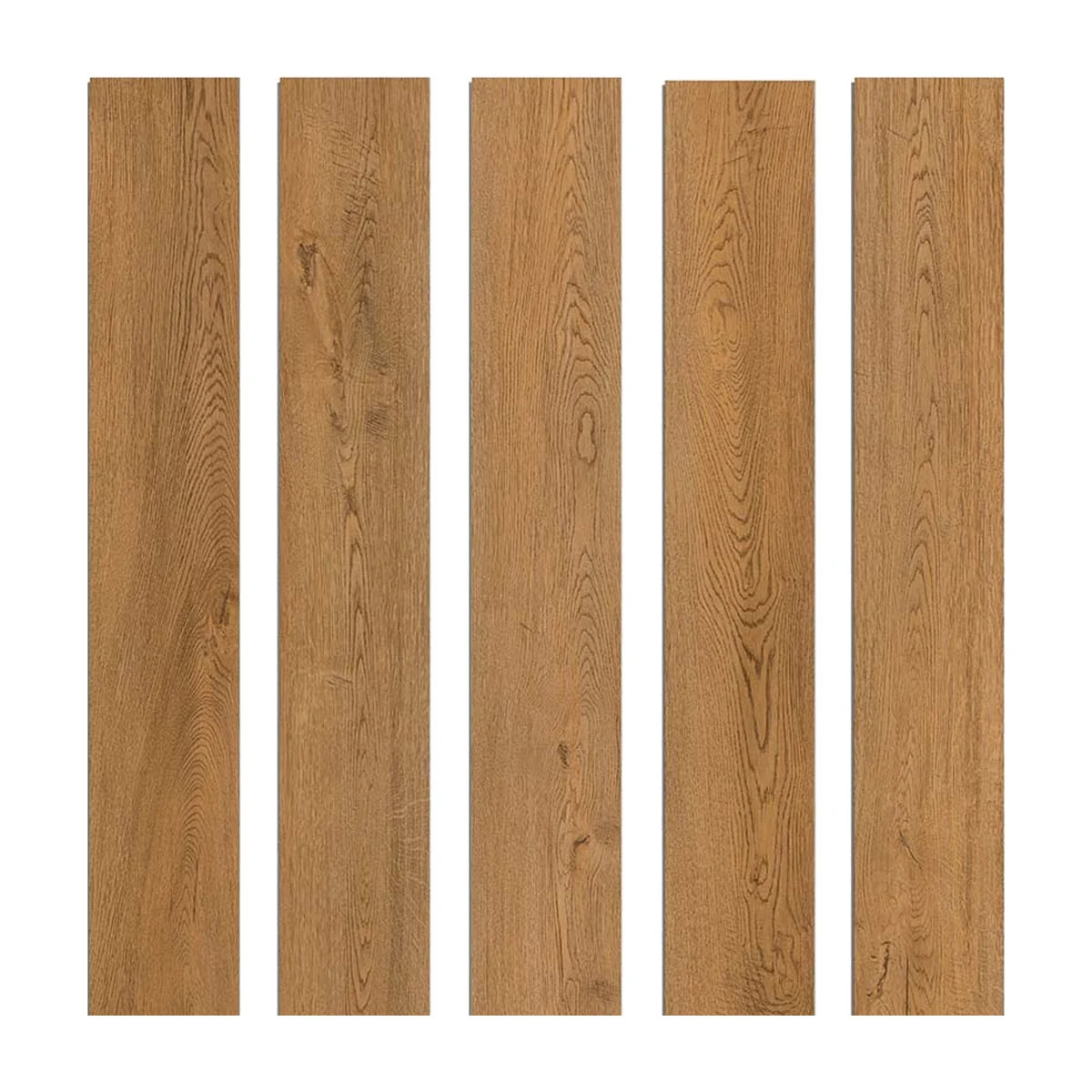
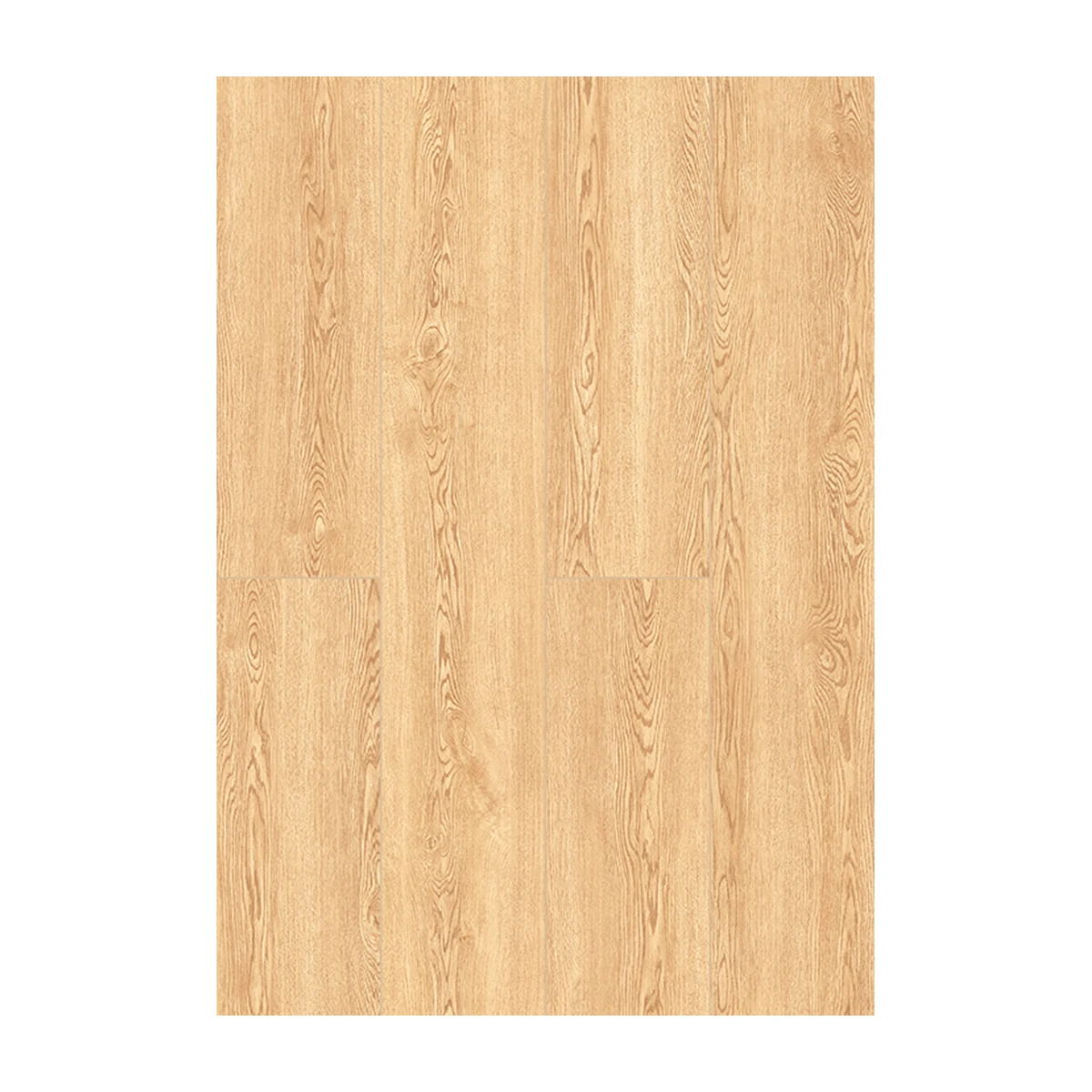
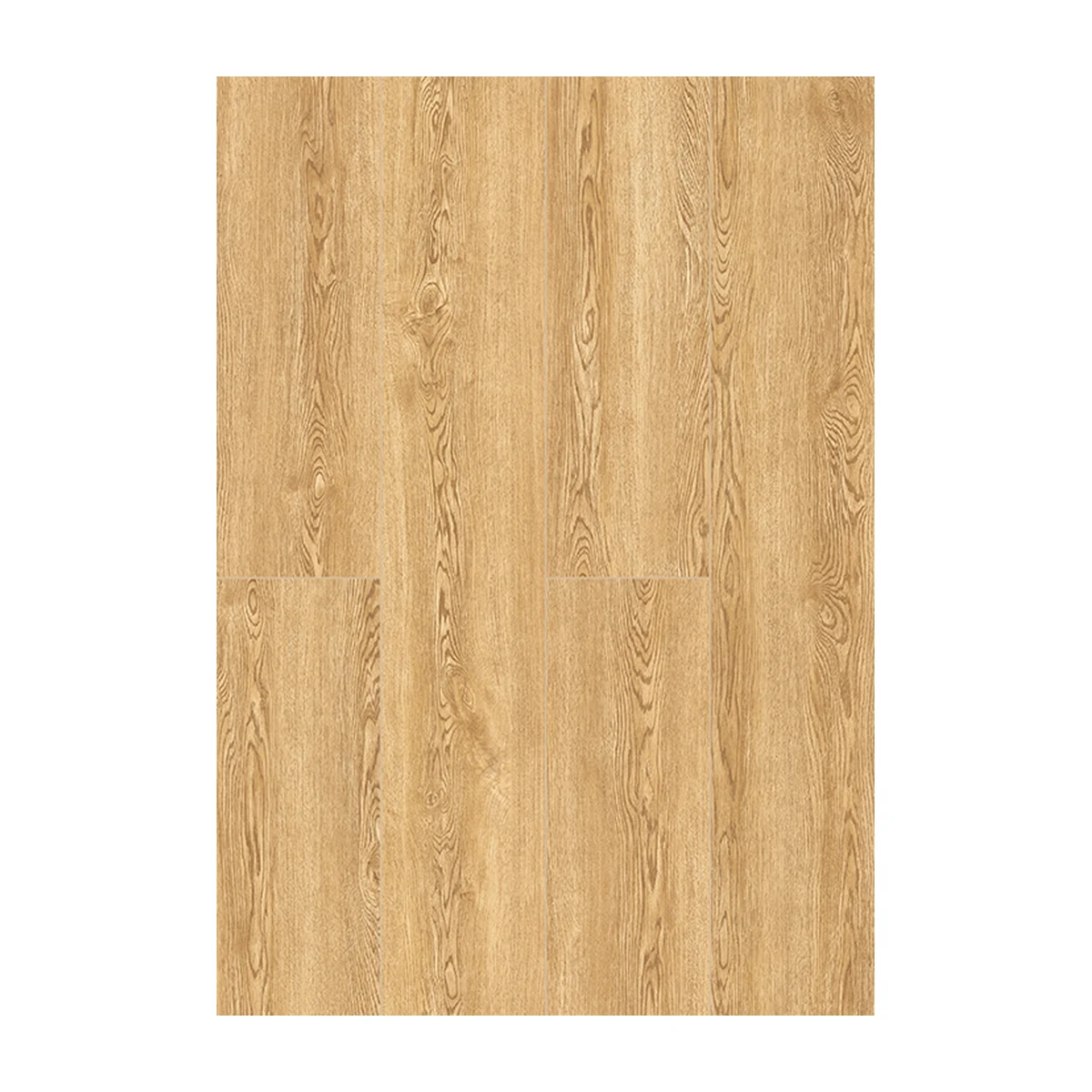
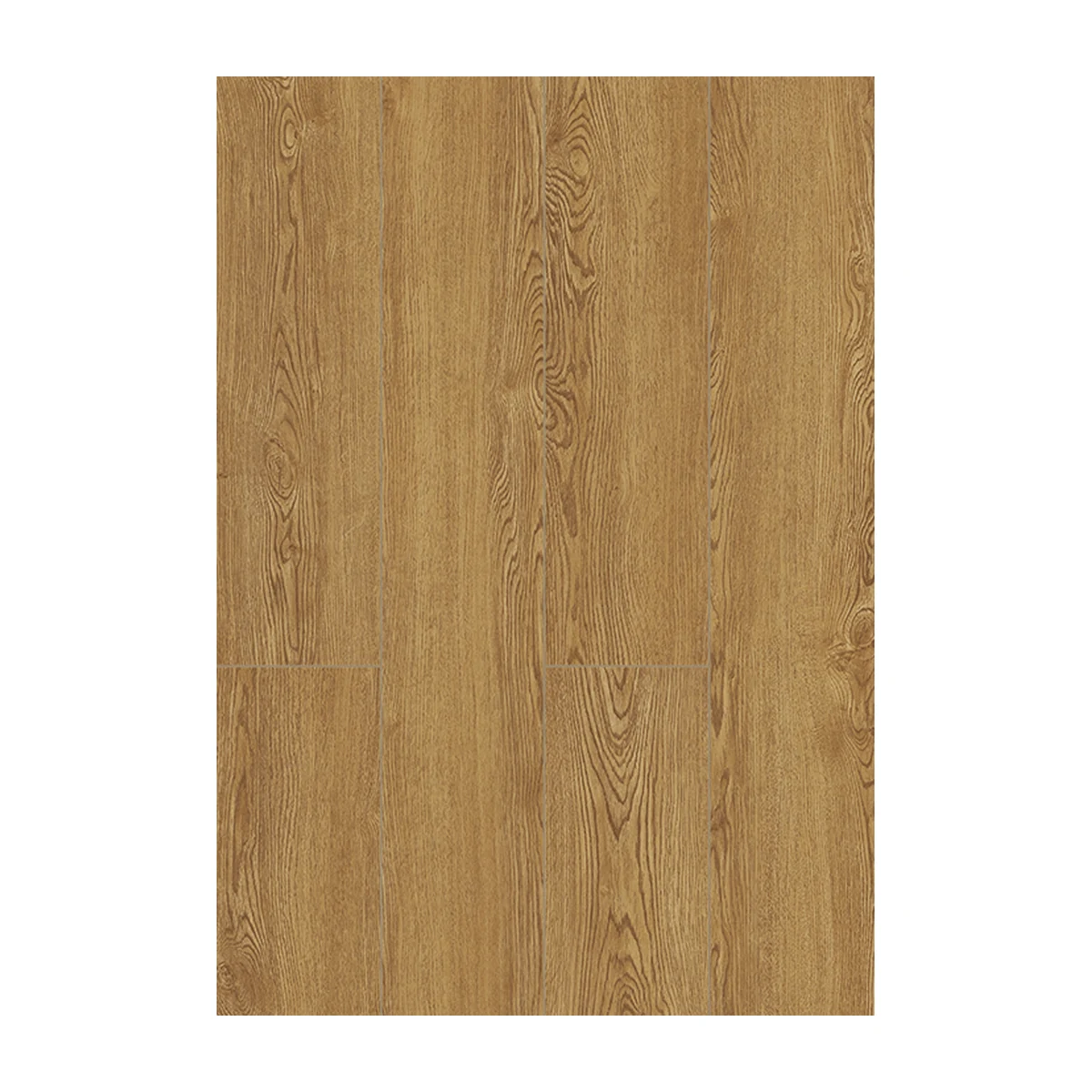
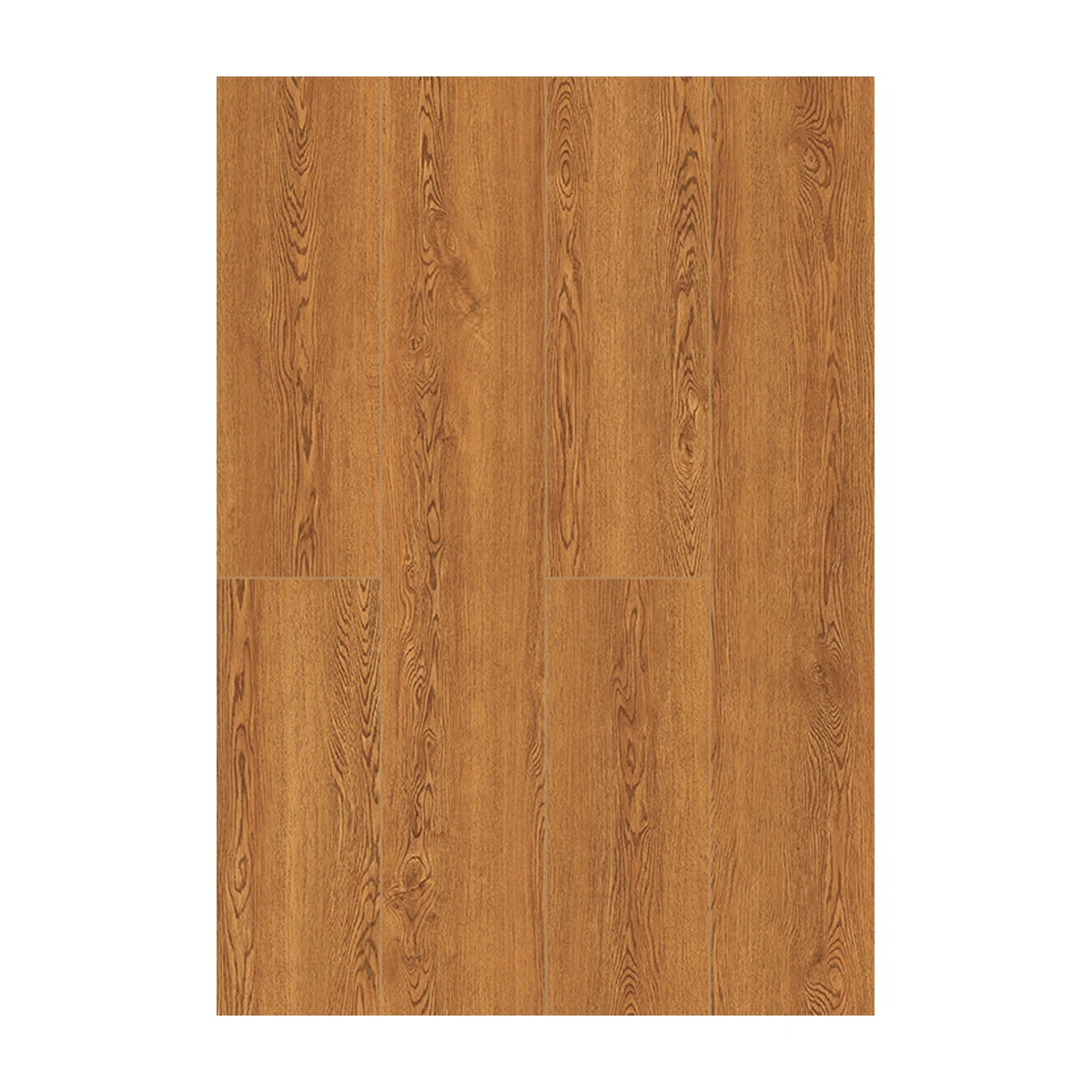
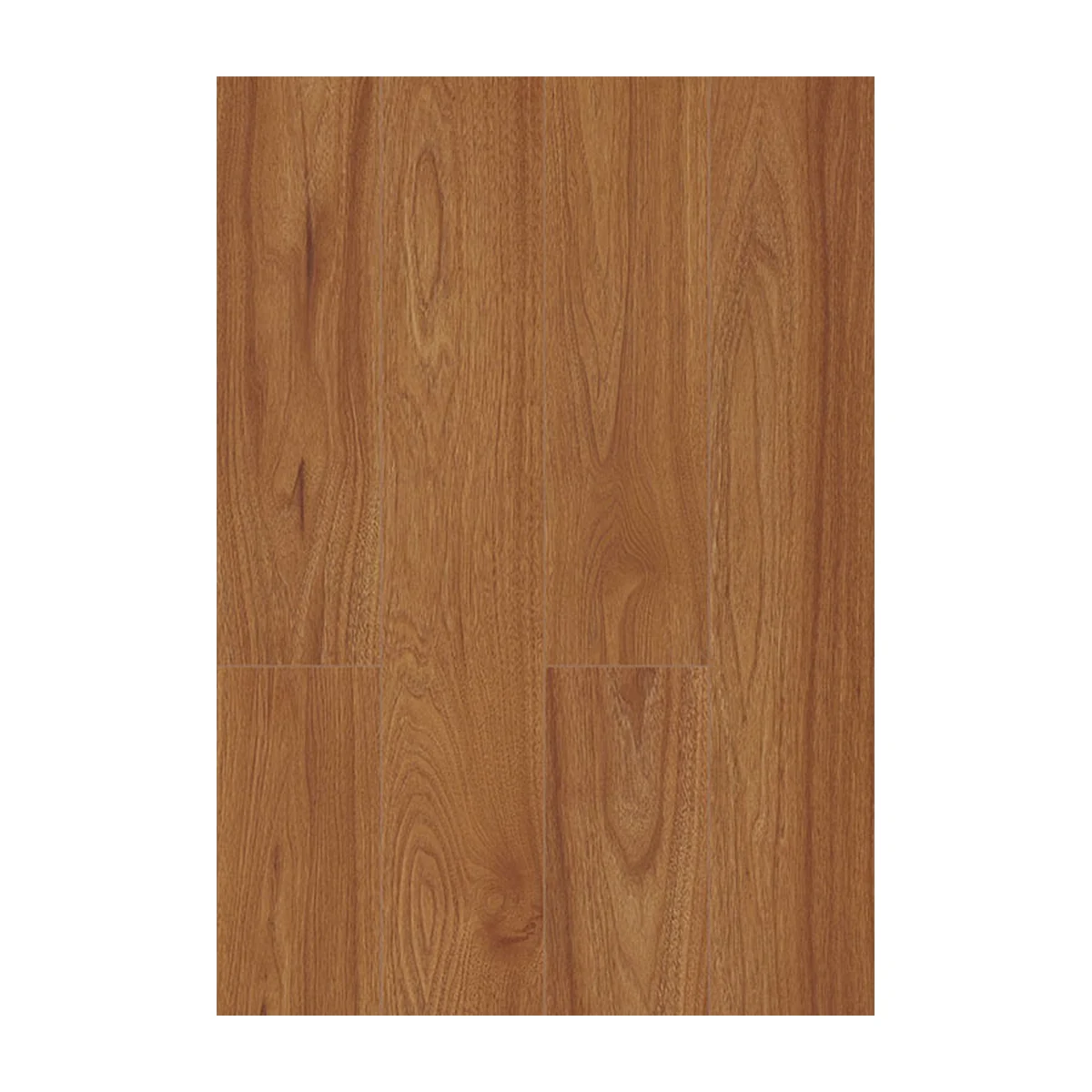
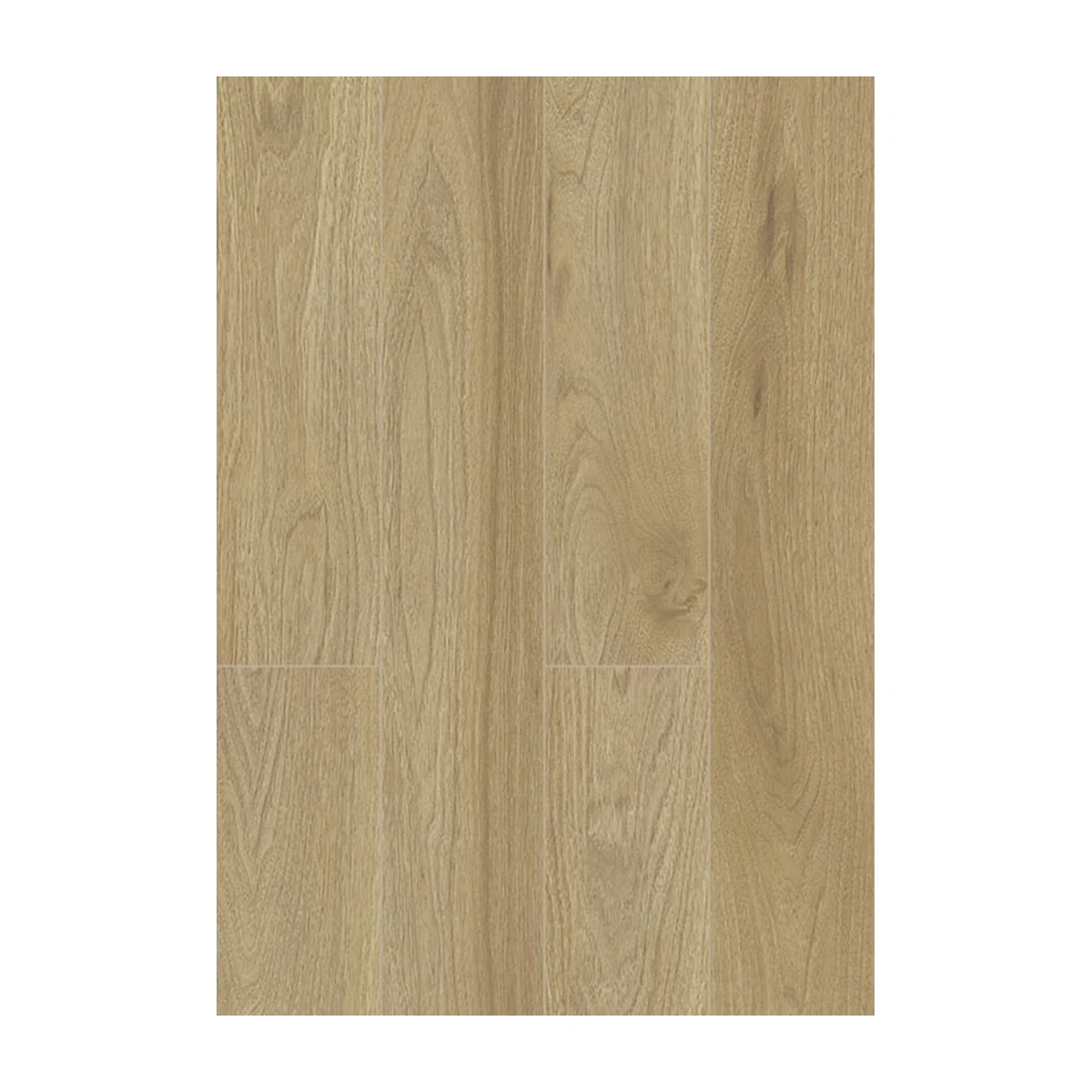
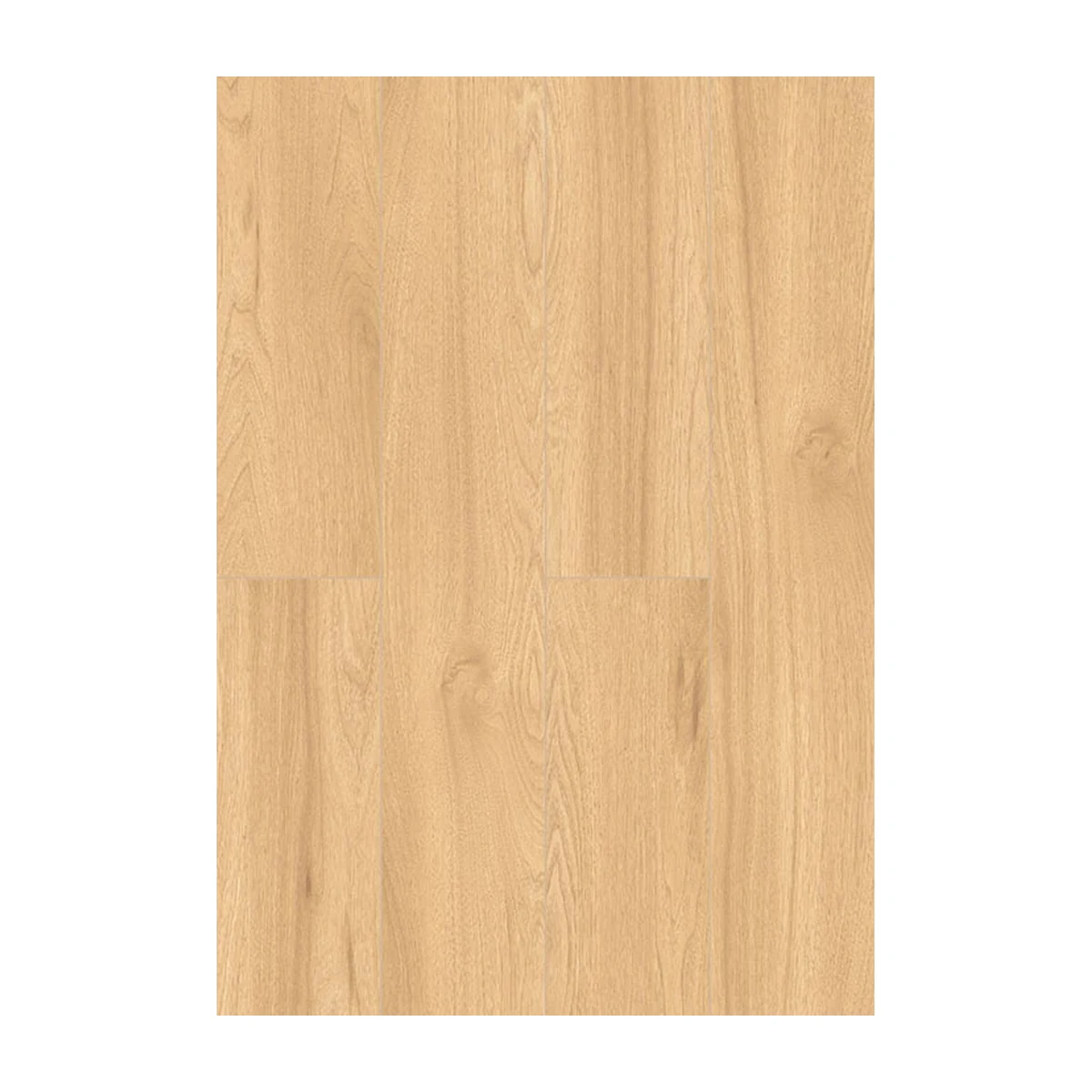
- Decor film — the oak or the stone, printed and pressed into the wear layer. Twelve shades in the current card.
- SPC core — 70 % limestone, 30 % PVC, extruded dense. It is the reason the board does not move: −0.05 % after six hours at 80 °C.
- Backing — IXPE or EVA, 1 or 1.5 mm, or none at all. The foam takes the hollow sound out of a floating floor.
- The joint — Unilin or Välinge 2G milled into the core; 5G on request. 5.4 kN/m locking strength on the long side.
02 — PLANK FORMATS
Plank formats
Six formats, each one board build. Areas are per piece; cartons hold 5 boards at 184 × 1,220 mm (1.12 m²) and 4 at 230 × 1,525 mm (1.40 m²).
| Format | Size (mm) | Size (in) | Area / pc (m²) | Area / pc (sq ft) |
|---|---|---|---|---|
| SP-01 | 152 × 914 | 6″ × 36″ | 0.139 m² | 1.50 sq ft |
| SP-02 | 152 × 1,220 | 6″ × 48″ | 0.185 m² | 2.00 sq ft |
| SP-03 | 184 × 1,220 | 7.25″ × 48″ | 0.224 m² | 2.42 sq ft |
| SP-04 | 230 × 1,220 | 9″ × 48″ | 0.281 m² | 3.02 sq ft |
| SP-05 | 230 × 1,525 | 9″ × 60″ | 0.351 m² | 3.78 sq ft |
| SP-06 | 230 × 1,825 | 9″ × 72″ | 0.420 m² | 4.52 sq ft |
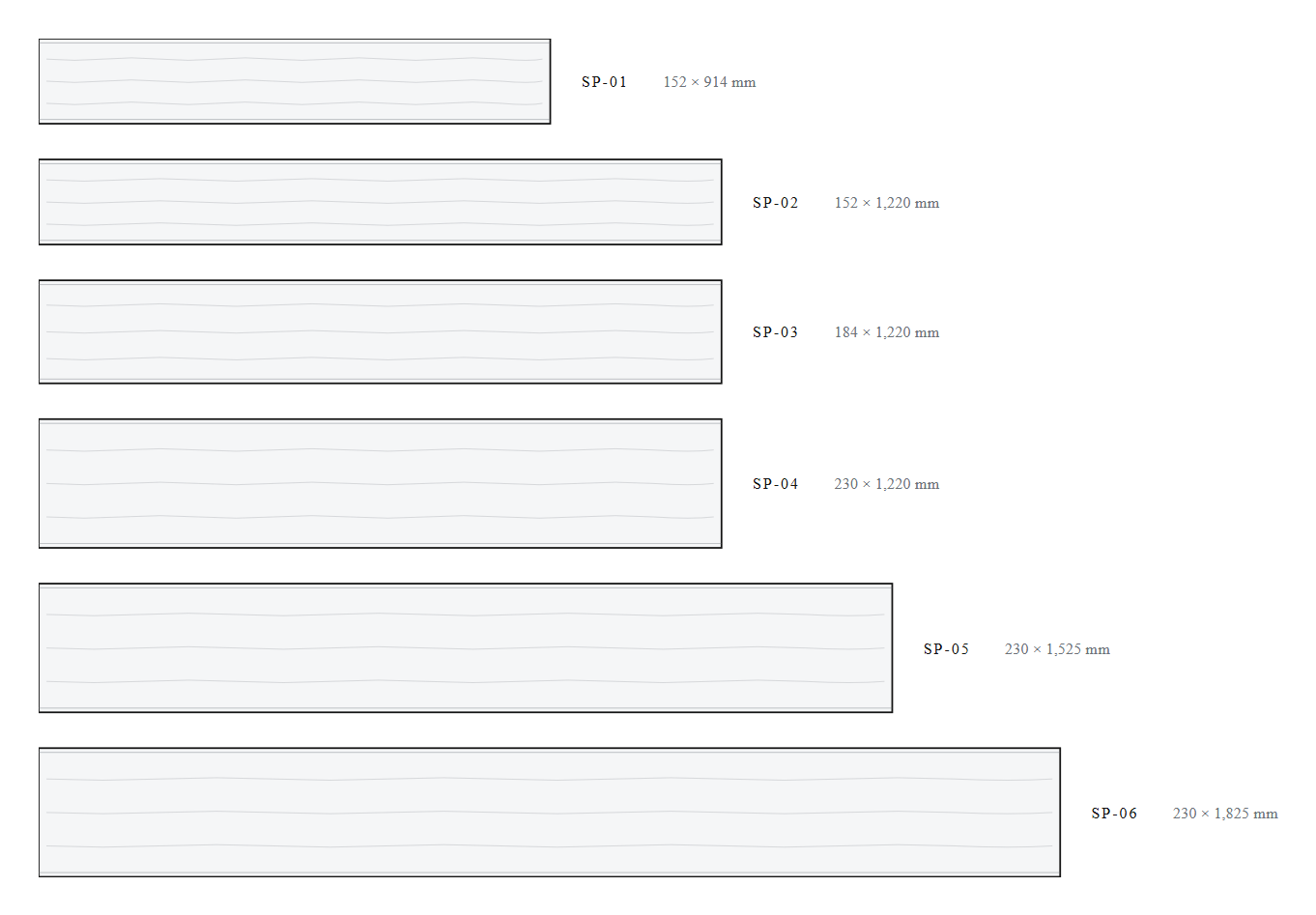
Also made: 305 × 610 mm tile (12″ × 24″), 640 × 128 mm herringbone, 610 × 305 and 900 × 450 mm stone look, and any length to 1,850 mm on request.
03 — SPECIFICATION RANGE
Specification range
| Thickness | 3.5 / 4 / 4.5 / 5 / 5.5 / 6 / 6.5 / 7 mm (other thicknesses on request) |
| Wear layer | 0.1 / 0.2 / 0.3 / 0.4 / 0.5 mm |
| Plank sizes | 152 × 914 · 152 × 1,220 · 184 × 1,220 · 230 × 1,220 · 230 × 1,525 · 230 × 1,825 mm |
| Tile size | 305 × 610 mm (12″ × 24″) |
| Herringbone | 640 × 128 mm |
| Stone look | 610 × 305 · 900 × 450 (min 5 mm, +0.1 mm wear on back) |
| Max length | 1,850 mm on request |
| Click system | Unilin / Välinge 2G standard, 5G on request |
| Backing | None, or IXPE / EVA 1–1.5 mm bonded on |
| Peel strength | ≈ 75 N/5 cm at 0.3 mm wear |
| Snap tension | ≥ 150 N/10 cm |
| Scratch resistance | 2,000 g |
| Shrinkage / warping | ≤ 0.15 % / ≤ 0.5 mm |
| MOQ | 600 m² stock film · 3,000 m² custom film |
| Loading | 20 pallets per 40HQ (14 pallets for 1,524 mm planks) |
1 in = 25.4 mm. Prices on request — EXW is the base quotation, FOB Shanghai or Ningbo once quantity is known. Valid 30 days, reconfirmed on the order date.
04 — TESTED PERFORMANCE
Tested performance
Measured by SGS to ISO 10582:2017 on a 182 × 1,220 × 4 mm board at 23 °C / 50 % RH. Where the tested board was thinner or narrower than the format you order, the value is cited for the tested board.
| Test | Result |
|---|---|
| Flatness | Concave 0.03 % · convex 0.04 % |
| Openings / height difference | Average 0.00 mm · maximum 0.05 mm |
| Locking strength | 5.4 kN/m long side · 4.9 kN/m short side |
| Mass per unit area | 8,108 g/m² at 4 mm |
| Dimensional stability (6 h at 80 °C) | 0.00 % / −0.05 % · curling 0.0 mm |
| Overall thickness | 4.01 mm (3.98–4.04 mm) |
| Castor chair, 25,000 cycles | No visible damage |
| Ignitability, ISO 11925-2 | No flame spread to 150 mm · no filter-paper ignition |
Report SHIN2304000172CM01_EN, 31 May 2023. The full PDF is available on request.
05 — SURFACES AND COLOURS
Surfaces and colours
Seven embosses. EIR is the only one where the tool follows the print line for line; flat matte, coral and high gloss run on request.
- Crystal — glassy, fine grain.
- Shallow — light linear grain.
- Medium — the house standard for oak and ash.
- Deep — heavier shadow in the knots.
- Stone — slate and concrete decors.
- EIR — embossed in register, registered with the print.
- Diamond — fine cross-hatch, mostly commercial.

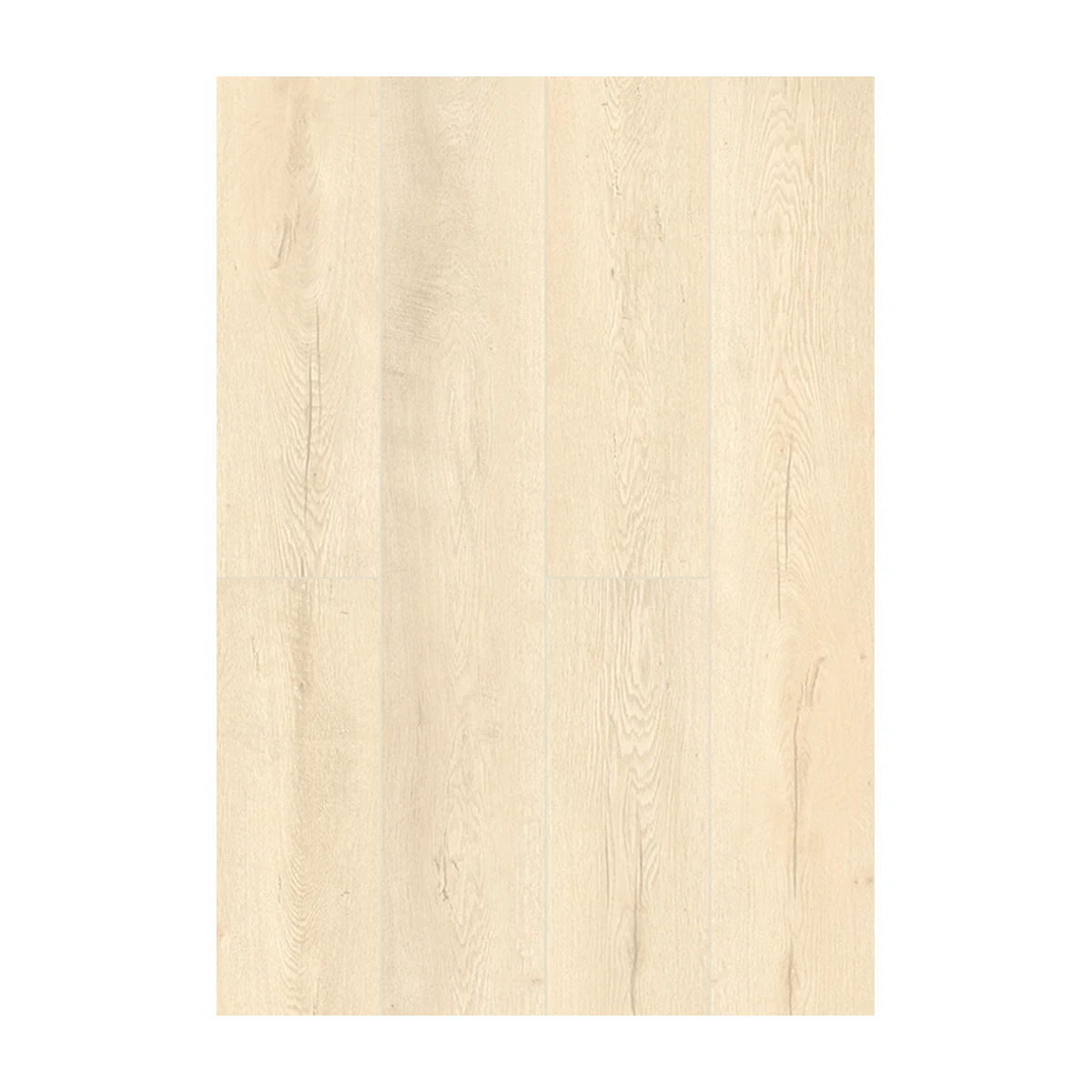
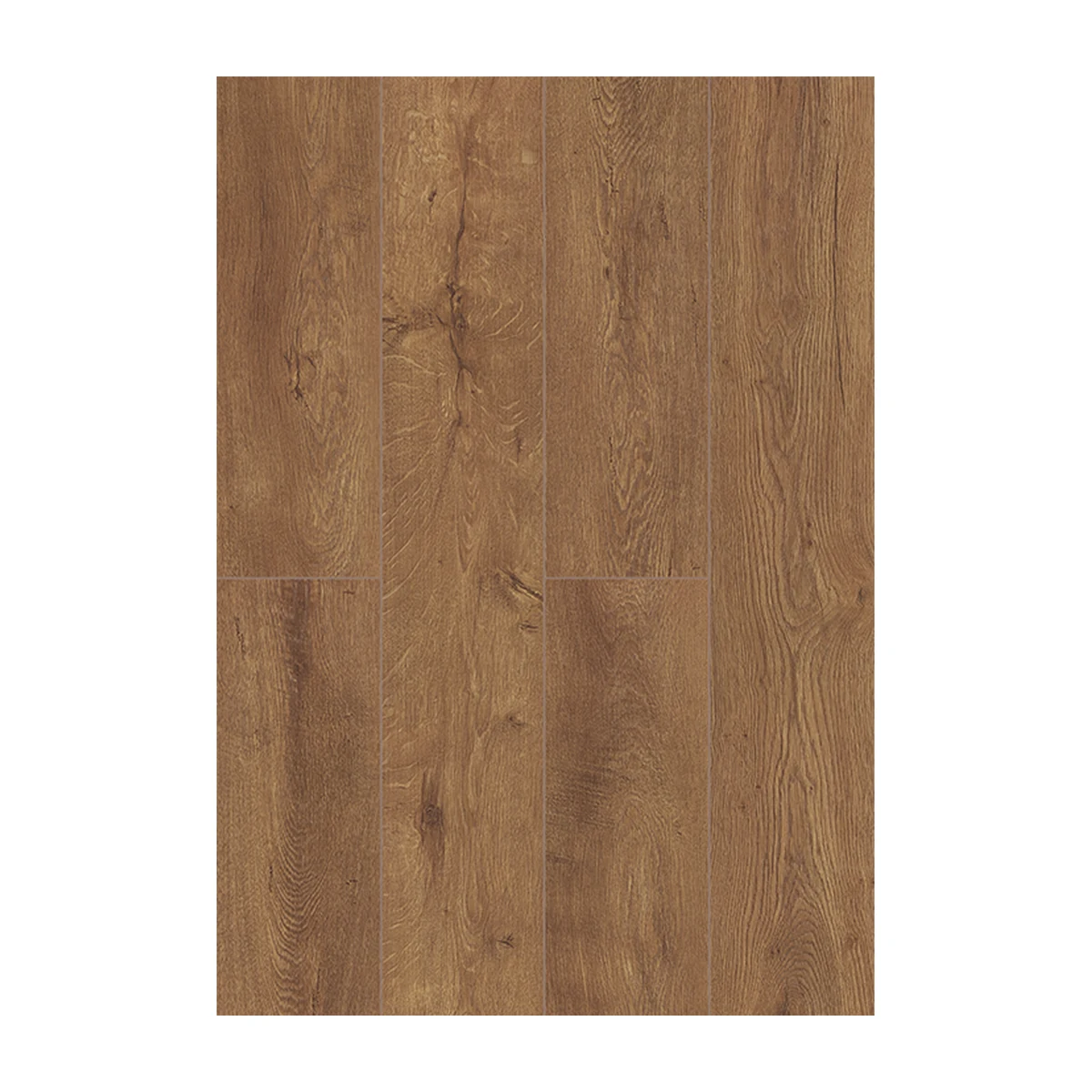
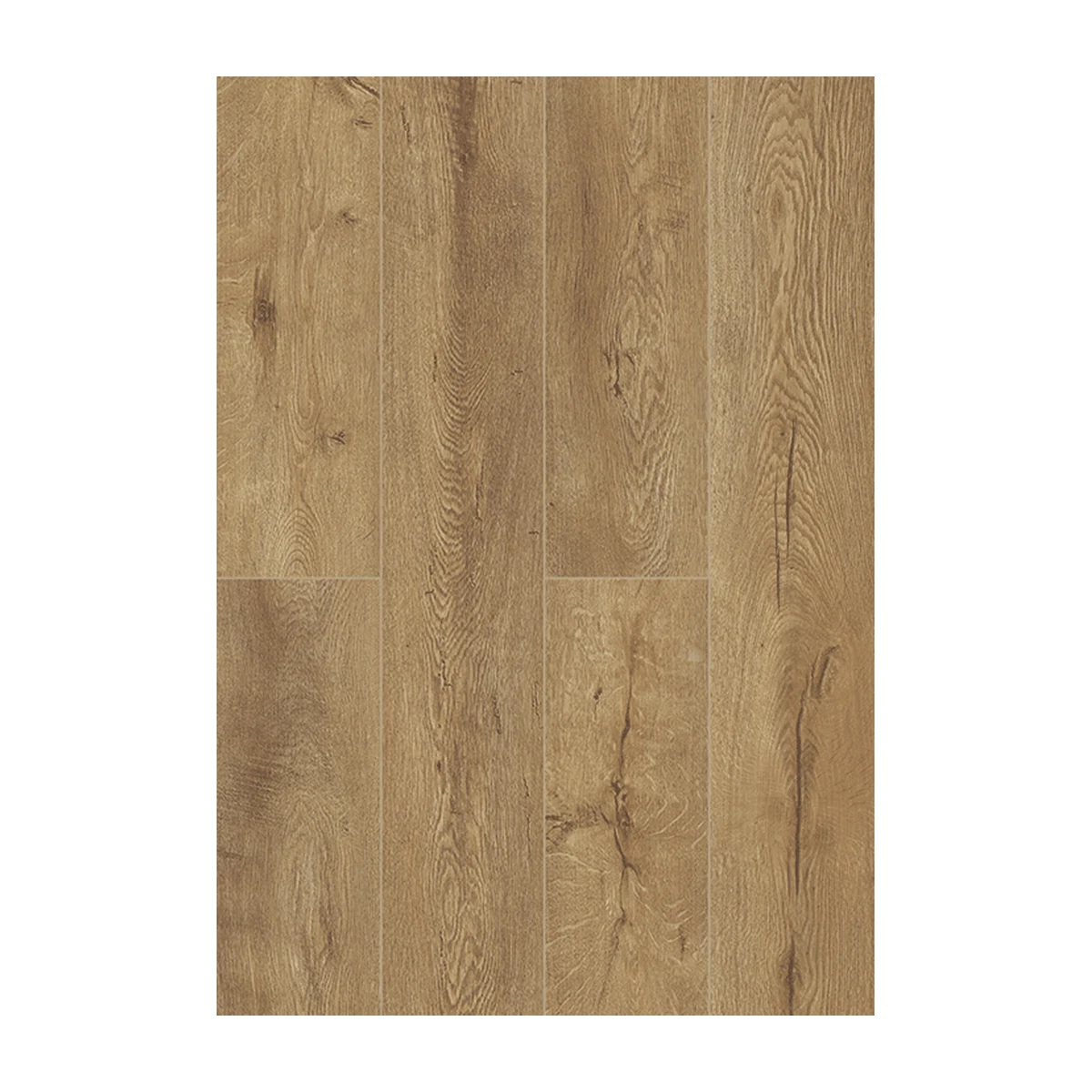
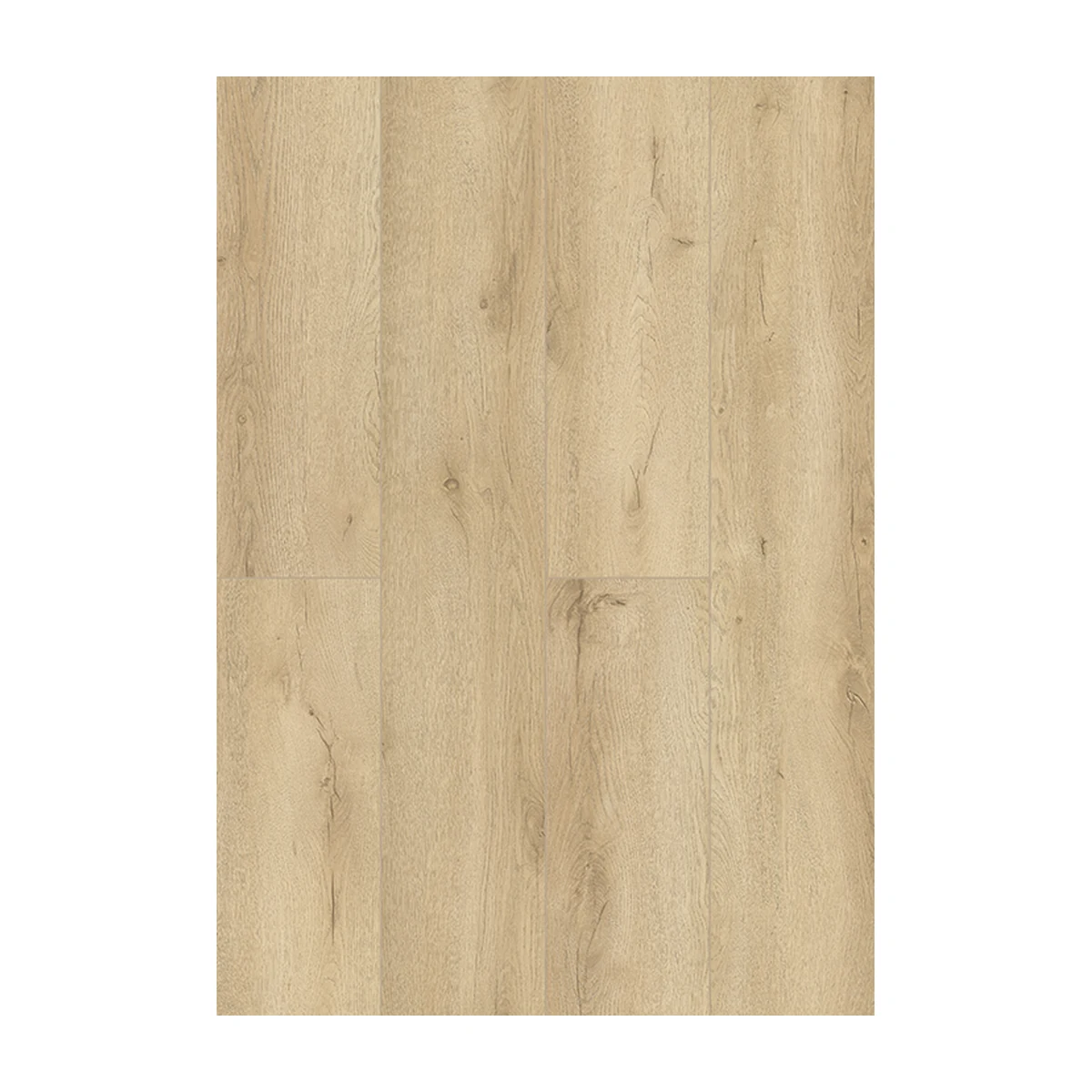
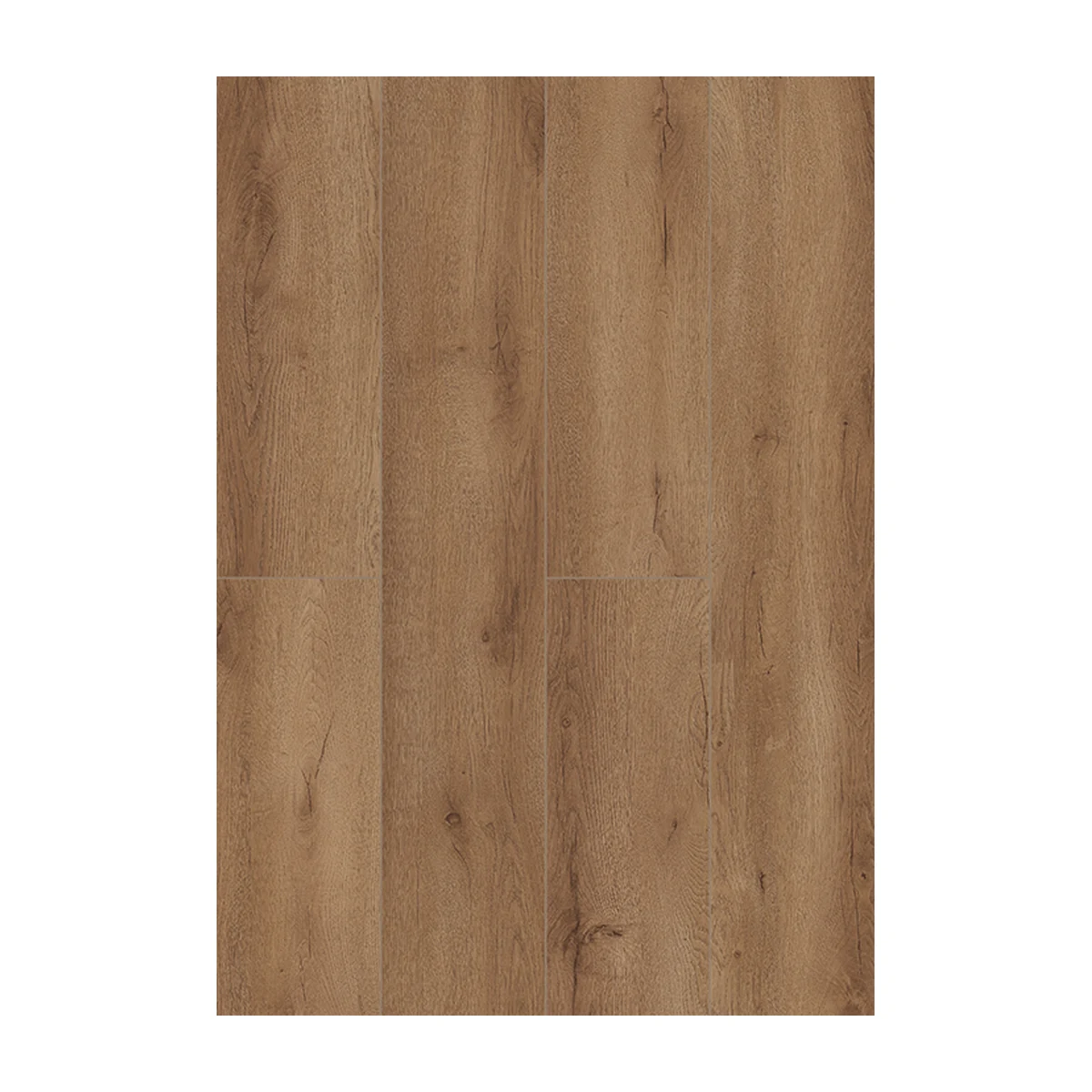
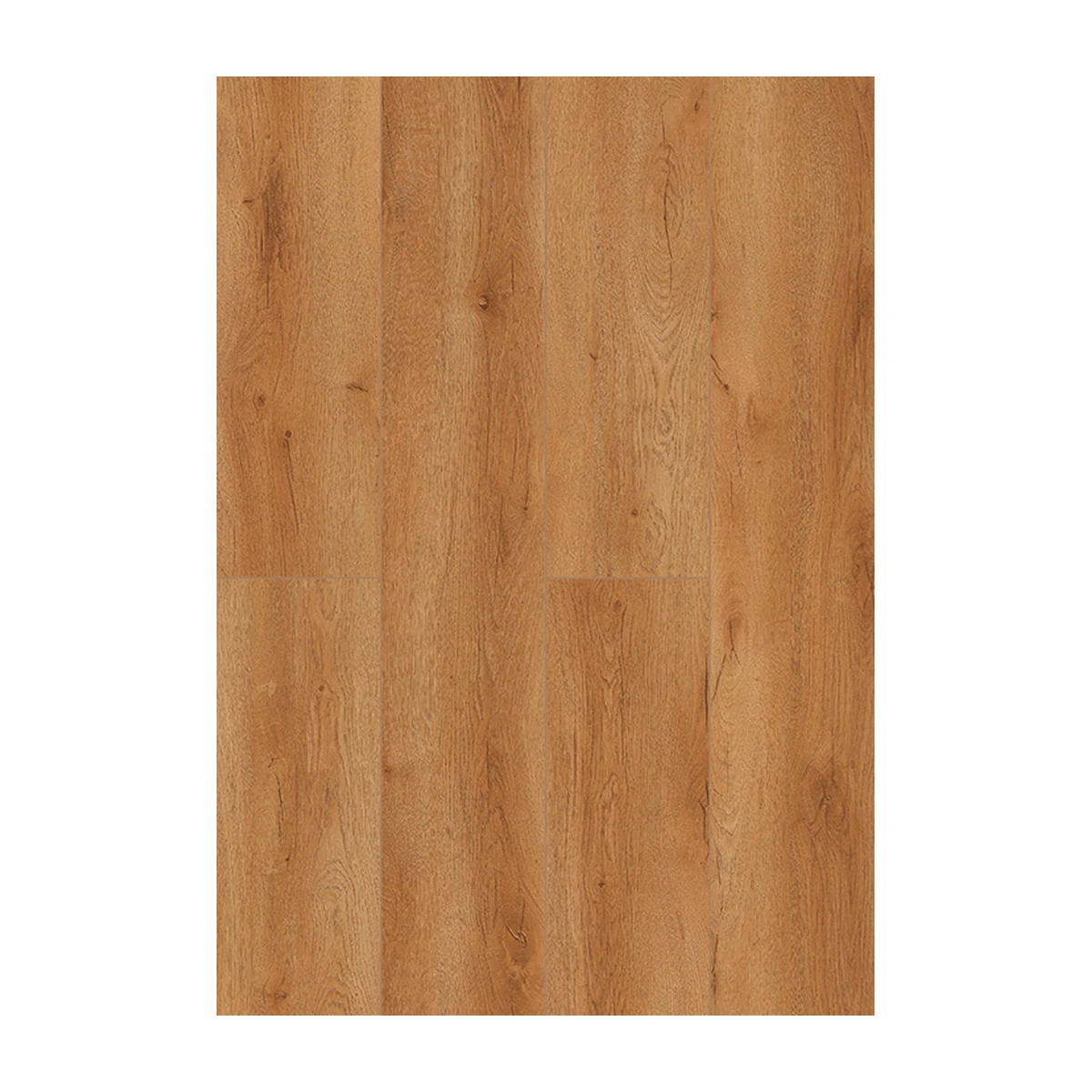
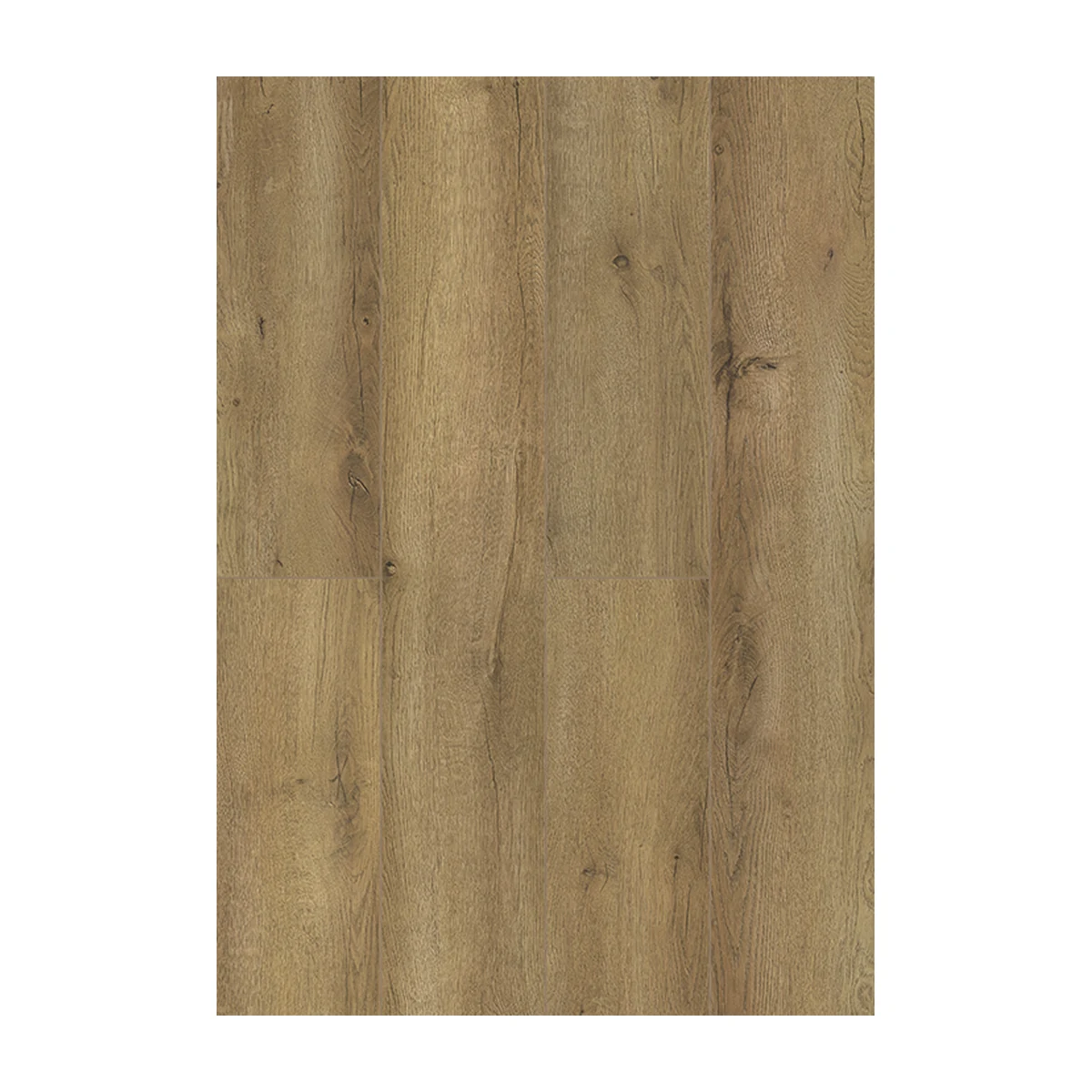
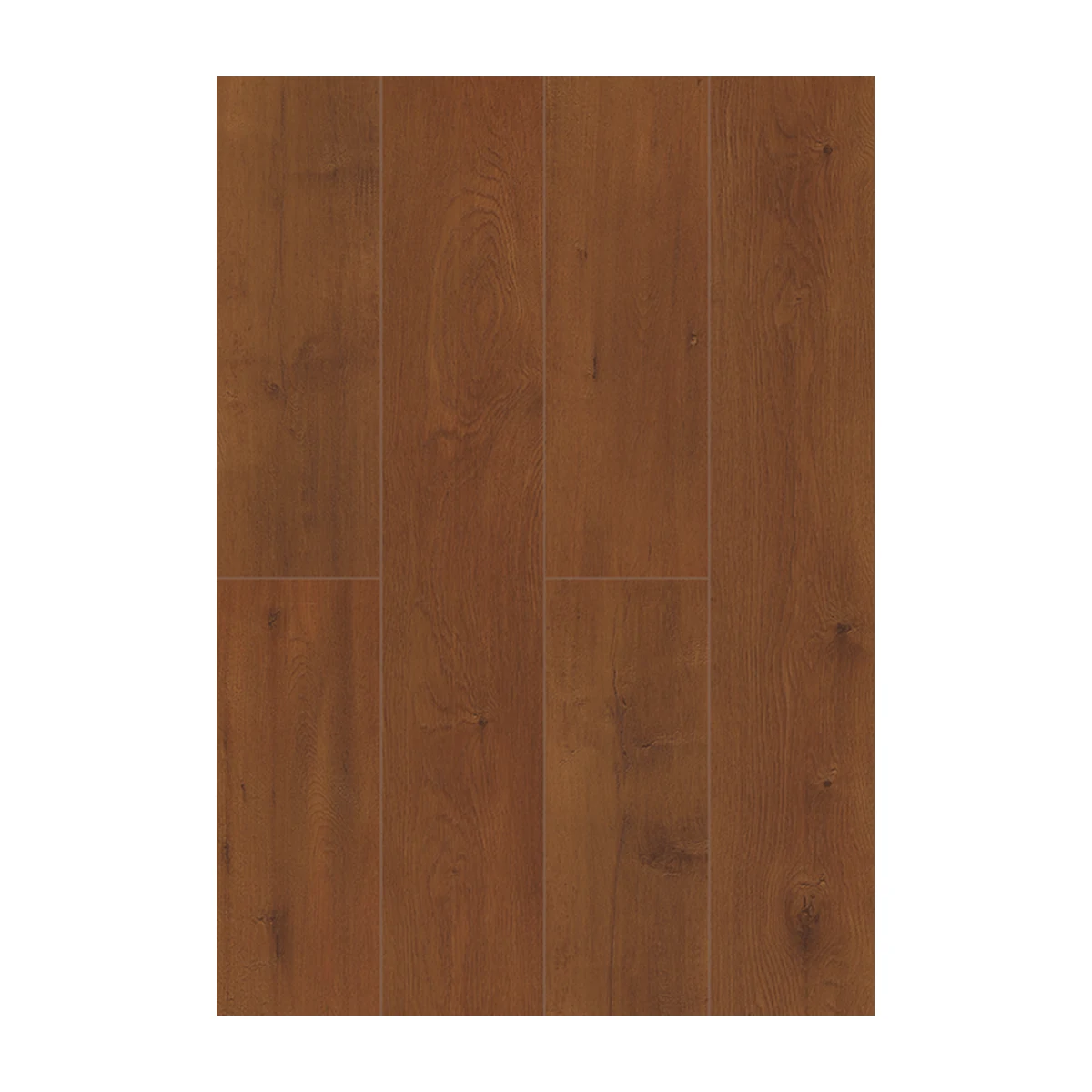
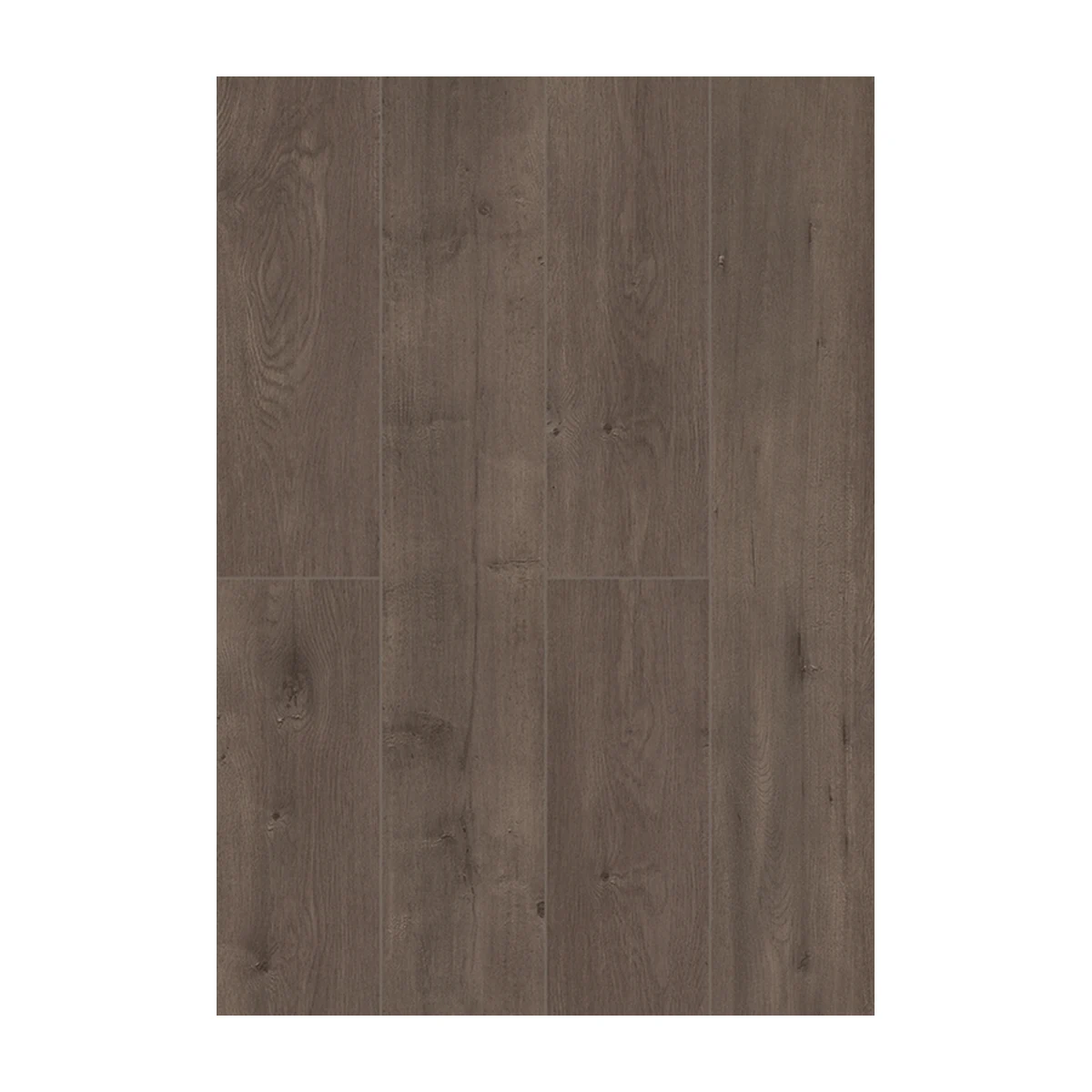
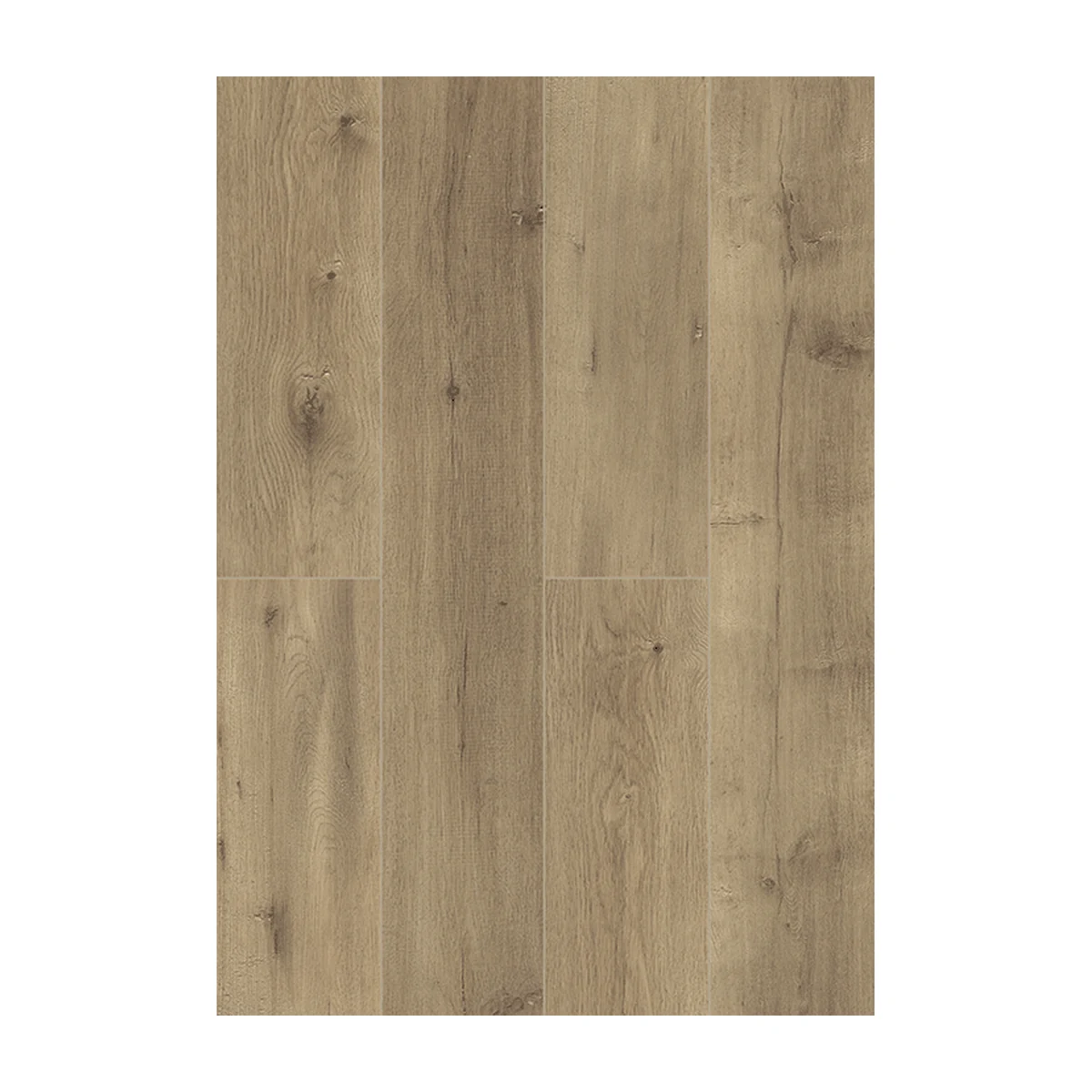
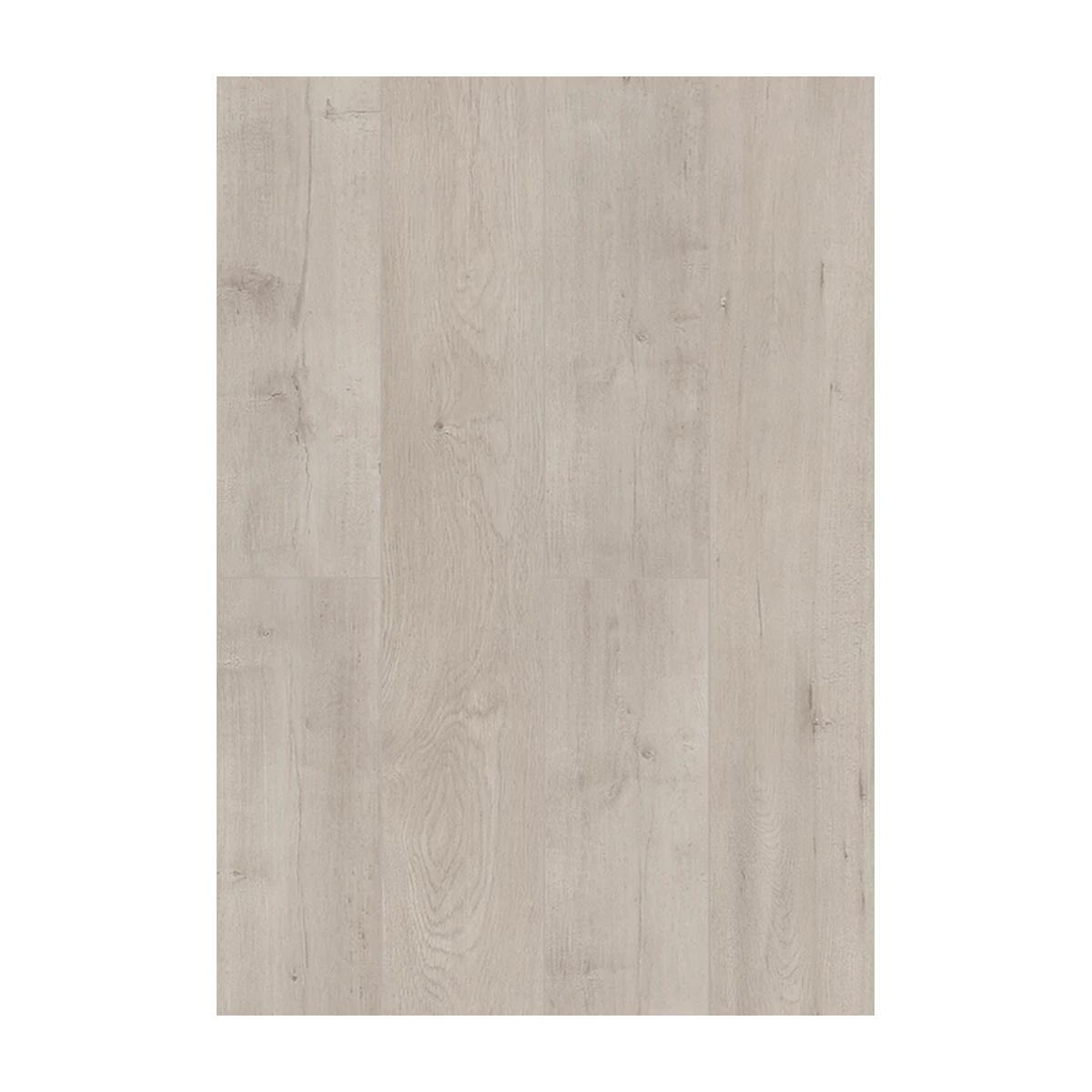
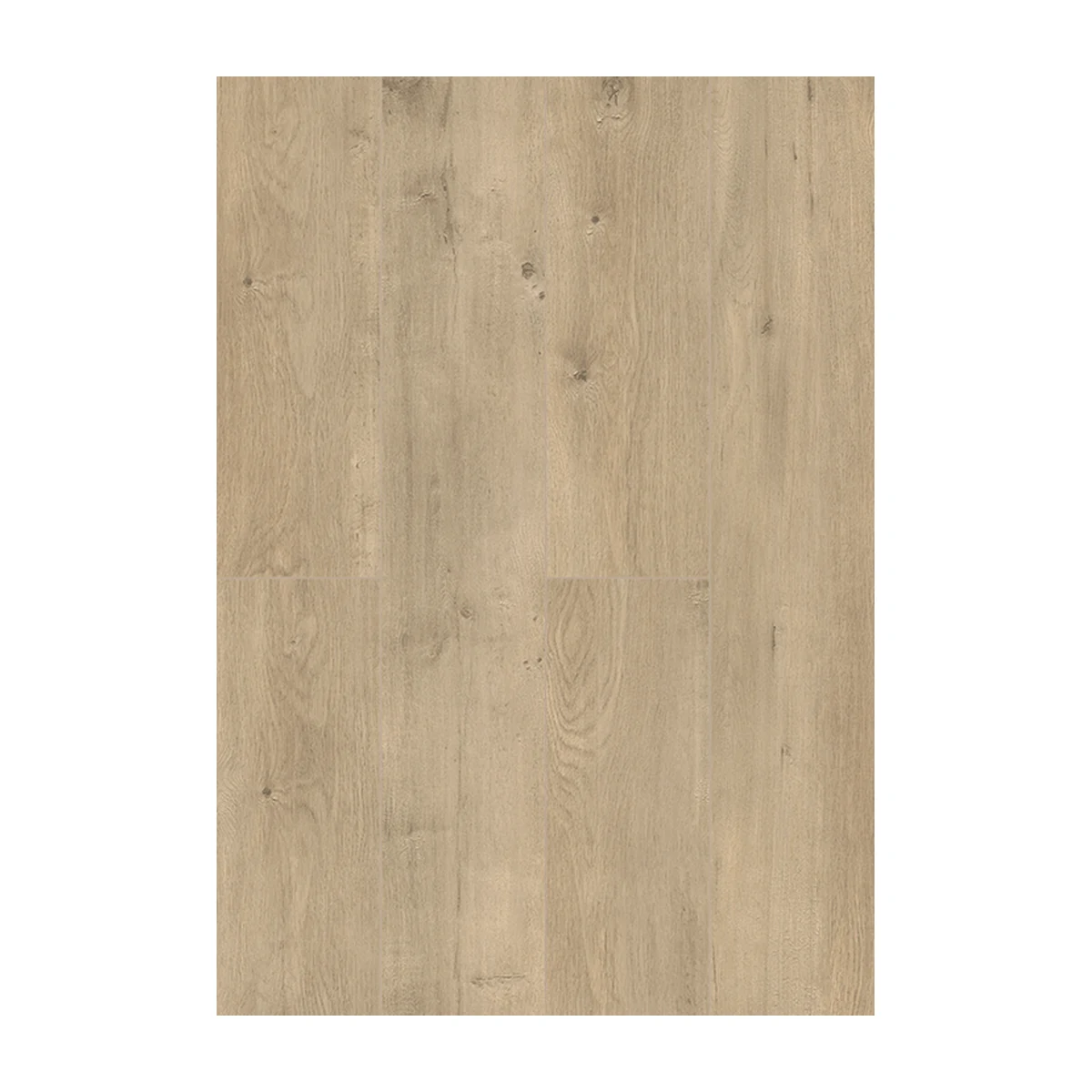
Twelve shades on stock film: L-1 chalk, L-2 ash, L-3 grey, L-6 blonde, L-7 drift, L-8 espresso, L-9 smoked, L-11 charcoal, L-13 honey, L-15 walnut, L-24 amber, L-17 olive (full code YJT2101L–n). Other shades, stone decors and custom printing from 3,000 m². Colours are printed, not veneered — ask for a physical swatch before specifying.

06 — INSTALLATION
Installation
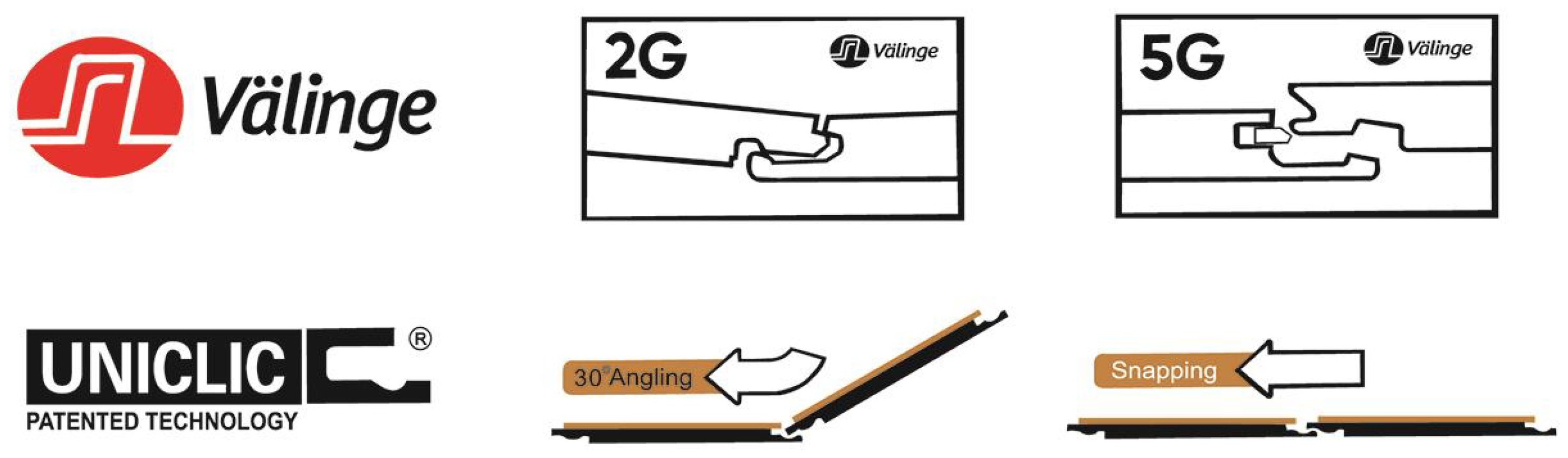
A floating floor over a sound subfloor, no adhesive. Both click systems start at 30° on the long edge; what differs is the short end.
- 2G — angle and fold. Long edge at 30°, short end folds down and locks itself. No tapping block.
- 5G — angle and press. Long edge at 30°, short end pressed in flat until it clicks; the tongue carries its own locking lip, so the joint can be lifted again.
Five steps on site
- 01 Check the subfloor — flat to 3 mm under a 2 m straight edge, dry and clean.
- 02 Lay the underlay — IXPE or EVA 1–1.5 mm, butt-jointed and taped. Skip it if the board carries its own backing.
- 03 Set the first row — 8–10 mm expansion gap at every wall. Over concrete below grade, lay a 6 mil vapour barrier first.
- 04 Work across the room — stagger short ends by at least 300 mm. Never force a board: lift it and start again.
- 05 Close the room — cut the last row, pull the spacers, fit skirting or trim. A 15 m run needs a movement joint.
Do not glue a floating SPC floor and do not double-layer underlay.
07 — MATCHING TRIMS
Matching trims
Made in the same film as the floor, 2,400 mm lengths:
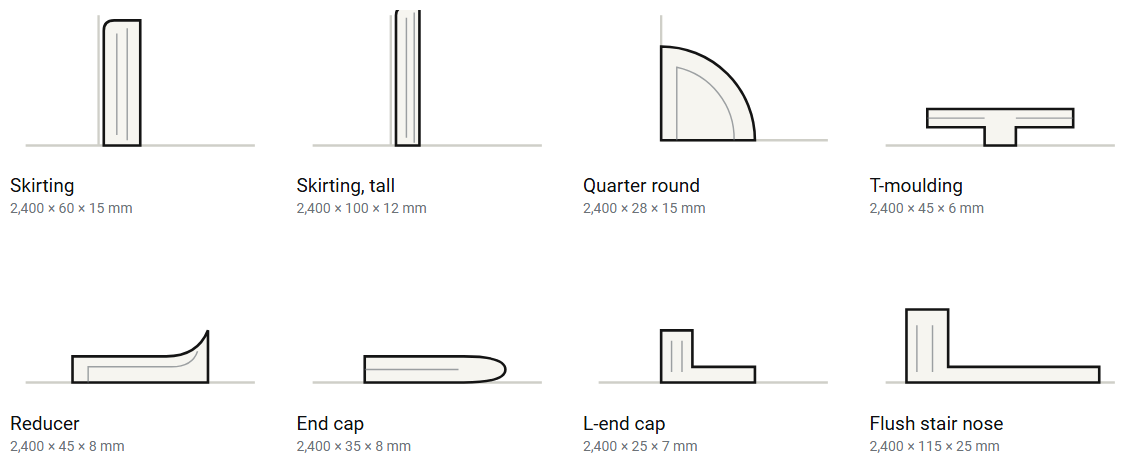
- Skirting 2,400 × 60 × 15 mm, and the tall profile 2,400 × 100 × 12 mm
- Quarter round 2,400 × 28 × 15 mm
- T-moulding 2,400 × 45 × 6 mm
- Reducer 2,400 × 45 × 8 mm and 2,400 × 35 × 8 mm
- End cap 2,400 × 35 × 8 mm; L-end cap 2,400 × 25 × 7 mm
- Flush stair nose 2,400 × 115 × 25 mm
08 — HOW IT IS MADE
How it is made
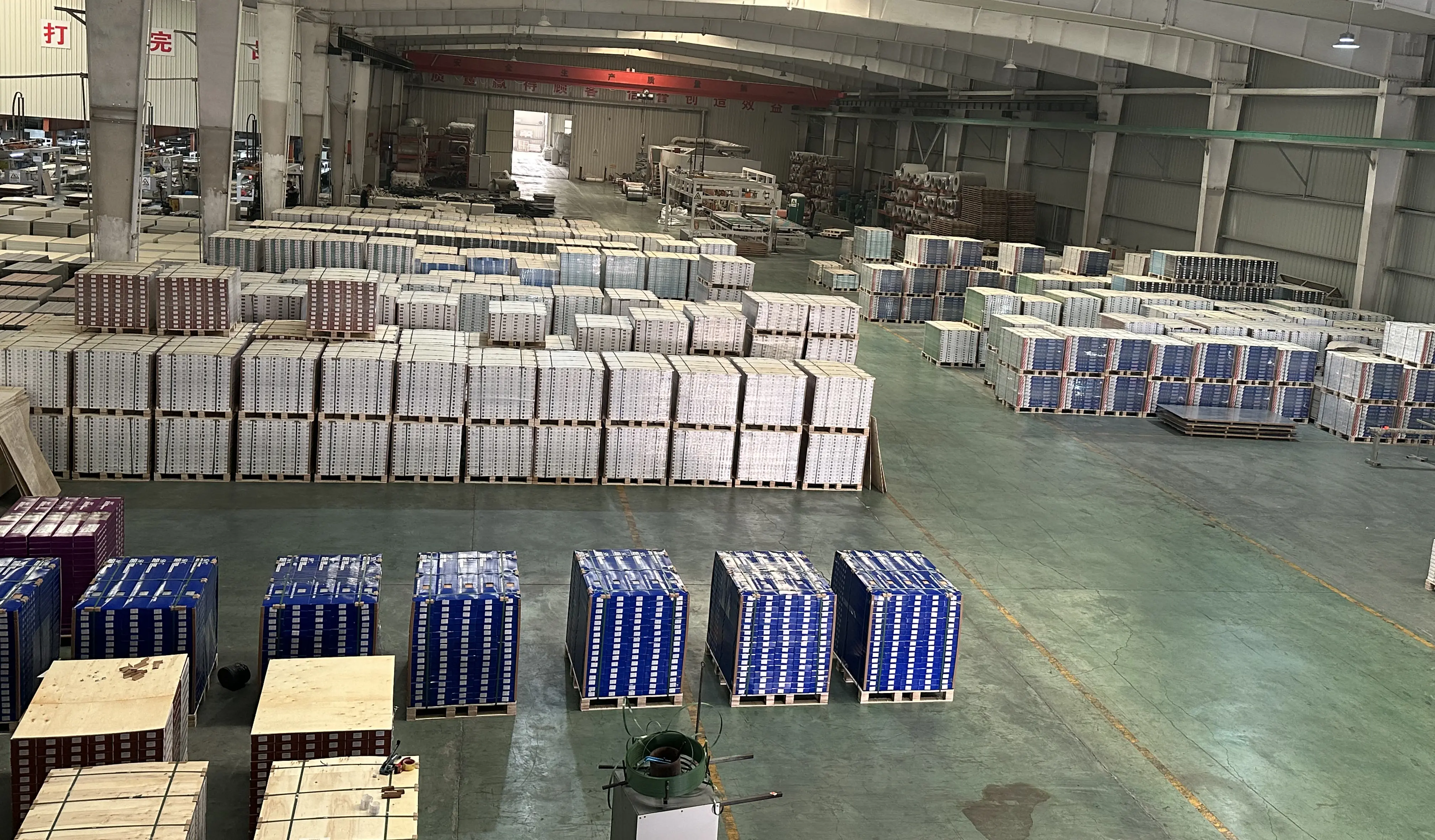
Dosing, extrusion, lamination, UV curing, milling and packing sit in one plant — nothing comes in as a finished board. The decor film and wear layer are pressed on hot, the emboss roll sets the grain, and the click profile is milled after the core has stopped moving.
Certification: CE (EN 14041), SGS to ISO 10582:2017, ISO 9001 and ISO 14001, FloorScore. Copies with each order.
09 — WHERE IT IS USED
Where it is used
Whole-house residential, basements, bathrooms, rentals, retail and hospitality. The safe choice over concrete, over existing tile, and anywhere a laminate core would swell.
Basement
Concrete slabs, damp air and low headroom — no swelling, no telegraphing.
Bathroom
Waterproof core with a 0.3 mm wear layer and R10 to EN 13893.
Rental & multi-family
12 mil for turnover, 20 mil where a corridor takes trolleys.
Garage & utility
Tolerates castor chairs and point loads; not for standing water.
10 — CHOOSING A STYLE
Choosing a style
Every style below uses the same core and click system — the style sets the film, surface and size, and you choose the thickness and wear layer to match the traffic.
11 — COMMON QUESTIONS
Common questions
What is the difference between 0.3 and 0.5 mm wear?
0.3 mm (12 mil) is the residential standard; 0.5 mm (20 mil) is specified for light commercial and heavy residential traffic.
Can I have my own decor?
Yes — custom film runs from 3,000 m², or 600 m² against a film deposit. EIR synchronised decors start at 1,000 m² per colour.
Is it suitable over underfloor heating?
Yes, on a heated screed. Keep the surface at or below 27 °C, bring it up to temperature gradually before laying, and never switch the heating off and on around the installation.
What is the difference between 2G and 5G?
2G folds the short end down onto the joint. 5G presses it in flat and carries a locking lip, so a board can be lifted again for repair. The long edge is angled at 30° in both.
Styles in this range