SPC and Laminate Flooring Supplier from China



LVT Flooring
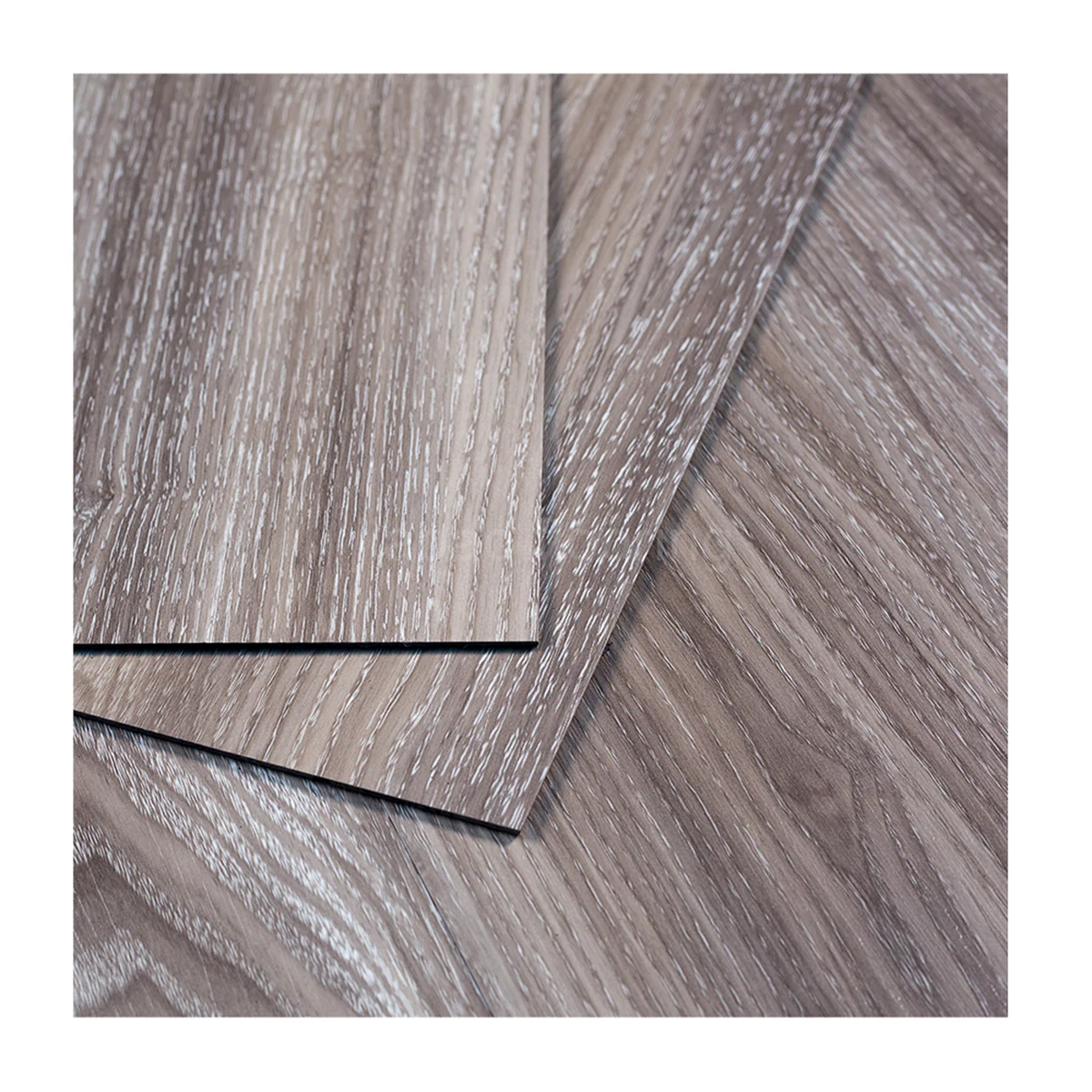
LVT — luxury vinyl tile — is a vinyl plank or tile in four installation formats: dryback (glue-down), self-adhesive, click and loose lay. It is thinner and softer underfoot than SPC, has the lowest thermal resistance of any resilient floor, and is the default for refurbishment where floor height and heat transfer matter.
1.5–3 mm
Dryback / self-adhesive
4–6 mm
Click / loose lay
0.07–0.55 mm
Wear layer
600 m²
MOQ (stock film)
01 — CONSTRUCTION
Construction
LVT is a vinyl plank or tile: a printed decor film, a clear vinyl wear layer, and a backing that decides how it is installed. Four formats share the same surface — dryback, self-adhesive, click and loose lay — and the format, not the decor, is what you specify.
- Wear layer — 0.07 to 0.55 mm clear PVC. This is the number that sets the life of the floor: 0.1 mm bedroom, 0.3 mm living, 0.5 mm office.
- Decor film — the print, under the wear layer. Registered emboss (EIR) follows the print line for line.
- Core / backing — dryback is a homogeneous vinyl backing glued to the slab; click adds a rigid core and a milled joint; loose lay relies on weight and friction.
- Finish — UV-cured polyurethane. Matte is standard; coral and high gloss on request.
Why LVT instead of SPC: it is thinner (from 1.5 mm), softer underfoot, and has the lowest thermal resistance of any resilient floor — the default where floor height or heat transfer matters.
02 — PLANK FORMATS
Plank formats
Four formats cover most of the range. Areas are per piece.
| Format | Size (mm) | Installation | Area / pc (m²) | Area / pc (sq ft) |
|---|---|---|---|---|
| LV-01 | 152 × 914 | Dryback / click | 0.139 | 1.50 |
| LV-02 | 230 × 1,220 | Dryback / click / loose lay | 0.281 | 3.02 |
| LV-03 | 457 × 457 tile | Dryback | 0.209 | 2.25 |
| LV-04 | 640 × 128 herringbone | Dryback | 0.082 | 0.88 |
03 — SPECIFICATION RANGE
Specification range
| Property | Range |
|---|---|
| Thickness | 1.5 / 1.8 / 2 / 2.5 / 3 mm dryback · 4–6 mm click / loose lay |
| Wear layer | 0.07 / 0.1 / 0.15 / 0.2 / 0.25 / 0.3 / 0.4 / 0.5 / 0.55 mm |
| Plank sizes | 152 × 914 (6″ × 36″) · 230 × 1,220 (9″ × 48″) |
| Grade guide | 1.5 mm / Class 21 / 0.1 mm bedroom · 2 mm / 22–23 / 0.1–0.3 mm living · 2.5 mm / 32 / 0.4–0.5 mm office · 3 mm / 33 / 0.5–0.55 mm hall, school |
| Shrinkage | ≤ 0.15 % (80 °C, 6 h) |
| Heat warping | Dryback ≤ 1.2 mm · click ≤ 1 mm · loose lay ≤ 0.5 mm |
| Peel strength | ≥ 50 N/50 mm |
| Thermal resistance | ≤ 0.15 m²K/W — underfloor heating |
| MOQ | 600 m² stock film · 3,000 m² custom |
04 — TESTED PERFORMANCE
Tested performance
Resilient vinyl is tested against a different set of standards to laminate or SPC. These are the limits we quote against.
| Test | Standard | Requirement / result |
|---|---|---|
| Dimensional stability | EN ISO 23999 | ≤ 0.15 % after 6 h at 80 °C |
| Residual indentation | EN ISO 24343 | ≤ 0.15 mm at 2.5 mm thickness |
| Peel strength | EN ISO 24345 | ≥ 50 N / 50 mm |
| Slip resistance | EN 13893 | R10 dry · R9 wet on smooth decors |
| Reaction to fire | EN 13501-1 | Bfl-s1 |
| Castor chair | EN 425 | No visible damage at 25,000 cycles |
| Thermal resistance | EN 12664 | ≤ 0.15 m²K/W — suitable over underfloor heating |
| Indoor air | AgBB / A+ | A+ on request, with the film and adhesive named |
05 — SURFACES AND TEXTURES
Surfaces and textures
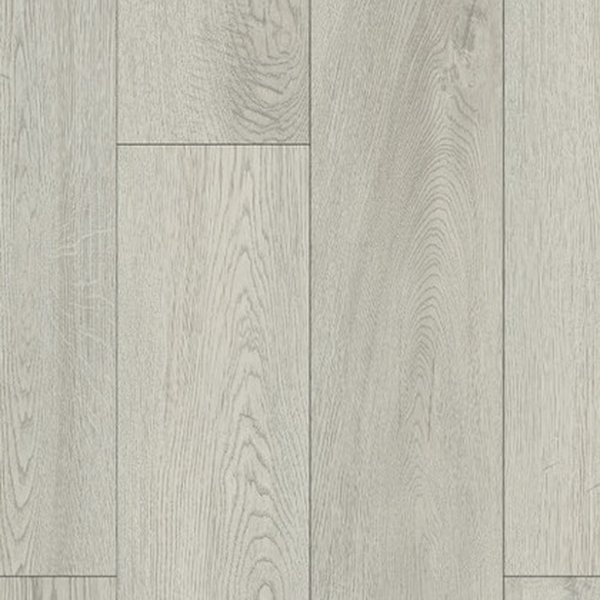
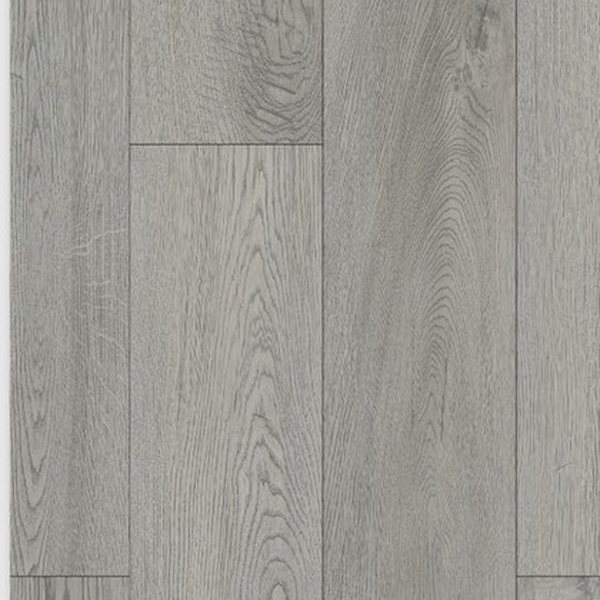
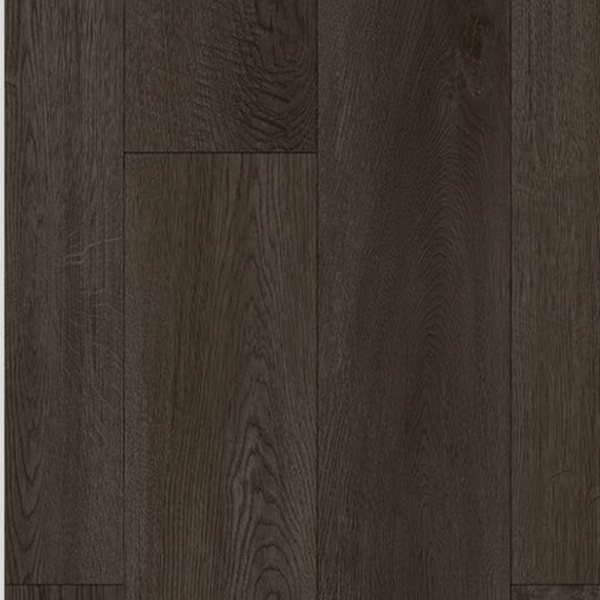
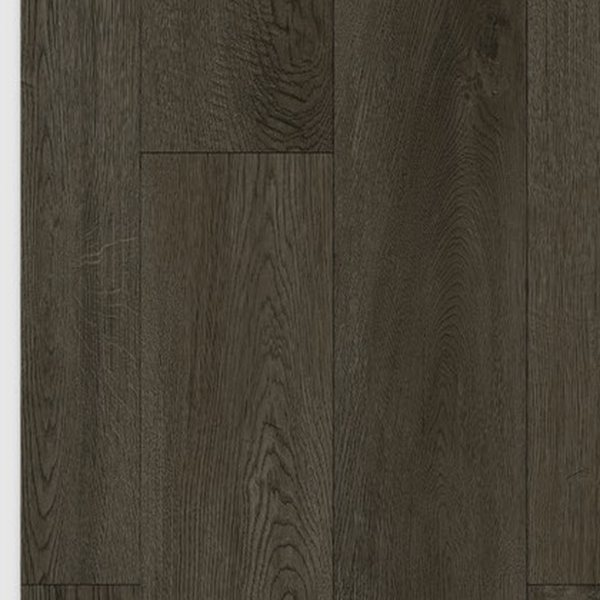
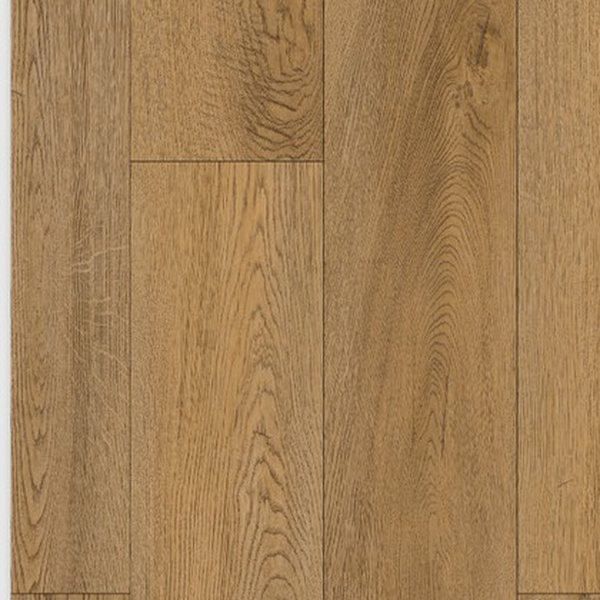
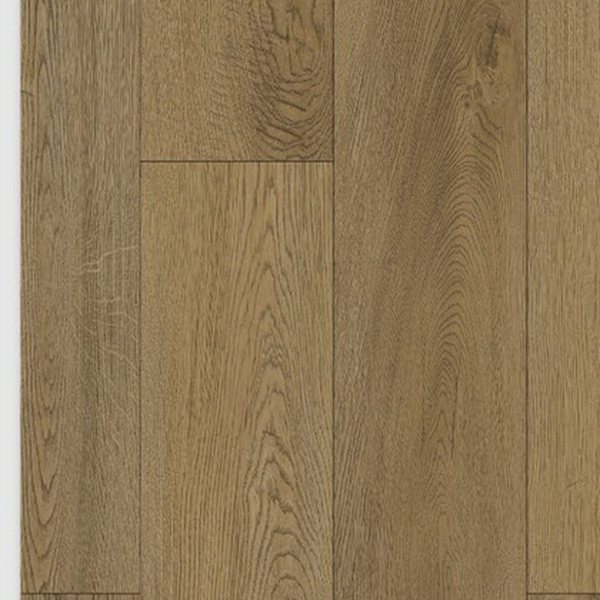
LVT is where colour does the work — stone, concrete and pale woods sell harder than dark oaks. Six from the current card.
06 — INSTALLATION
Installation
The format decides the method. All four need a flat, dry, clean slab — 3 mm under a 2 m straight edge, and no dust.
- Dryback — full-spread acrylic adhesive, trowel notch per the adhesive sheet, 24 h before traffic. The default for commercial.
- Self-adhesive — peel and lay, for small rooms and fast turnaround. Not for underfloor heating above 27 °C.
- Click — floating, 4–6 mm, 8–10 mm expansion gap, no adhesive. The fastest format and the one that lifts for a repair.
- Loose lay — no adhesive at all; the backing grips the slab. Only over a fully flat, sealed substrate, and never in a room that takes direct sun all day.
Acclimatise flat for 24 hours at 18–25 °C. Roll the floor in both directions, and keep a 5 mm gap at every fixed object.
07 — MATCHING TRIMS
Matching trims
Same film as the plank, 2,400 mm lengths, packed with plastic clips where needed:
- Skirting 2,400 × 60 / 80 / 90 × 15 mm
- Scotia 2,400 × 25–27 × 12 mm
- T-moulding 2,400 × 45 × 10/12 mm
- Reducer 2,400 × 45 × 11/15 mm
- End cap 2,400 × 22 × 10 mm
- Stair nose 2,400 × 55 × 18 mm
08 — WHERE IT IS USED
Where it is used
Thin, quiet and warm underfoot. It is the refurbishment floor: it goes over an existing hard surface without lifting the door line.
Refurbishment
1.5–2 mm over an existing tile or screed; no door trimming, no drying time.
Bathroom & kitchen
Dryback with a 0.3 mm wear layer, R10, perimeter sealed.
Retail & office
2.5–3 mm, 0.4–0.55 mm wear layer, class 32–33.
Underfloor heating
≤ 0.15 m²K/W and a 27 °C surface limit — the lowest of the three ranges.
09 — CHOOSING A STYLE
Choosing a style
Pick the format first, the wear layer second, the decor last. Getting that order wrong is what makes an LVT job fail.
- Dryback for commercial and for anything over an existing hard floor.
- Click for a fast install over a flat slab, and for rooms that may need a board lifted.
- Loose lay only where the slab is perfect and the room is not sun-baked.
- Wear layer: 0.1 mm bedroom, 0.3 mm living, 0.4–0.55 mm commercial. Thickness adds comfort, not wear life.
10 — COMMON QUESTIONS
Common questions
Is LVT waterproof?
The plank is. Water gets in at the joints and the edges, so a dryback floor is sealed at the perimeter and a click floor is not left under standing water. Bathrooms are fine with perimeter sealing.
Dryback or click?
Dryback is flatter, quieter and cheaper per m², but needs adhesive and 24 hours. Click is faster, lifts for repair, and floats — but it is 4–6 mm thick, which shows at a door.
Can it go over tile?
Yes, dryback over a sound, level tile with a smoothing compound. Grout lines wider than 5 mm need filling first, or they telegraph through at 2 mm thickness.
What wear layer do I need?
0.1 mm for a bedroom, 0.3 mm for living areas and light commercial, 0.4–0.55 mm for offices and schools. The wear layer is the floor’s life; the thickness is only comfort.